
Complete Terrace Gardening Guide (Experience-Based, Practical & Actionable)
Table of Contents
The Ultimate Complete Terrace Gardening Guide: From Concrete to Harvest
Terrace gardening isn’t just a trend anymore—it’s becoming a necessity, especially in cities where space is limited but the desire for fresh, chemical-free food and greenery keeps growing. I still remember when I first stepped onto my empty terrace, staring at plain concrete and thinking, “Can this really become a garden?”
Fast forward a few months, and that same space turned into a thriving green corner filled with tomatoes, chillies, herbs, and even a small lemon plant. If you’re standing at that same starting point, this complete terrace gardening guide will walk you through everything—step by step, without overwhelming you.
There is something deeply grounding about starting your day with the smell of wet earth and the sight of a new leaf unfurling—especially when that view is right on your rooftop. When I first started my gardening journey years ago, my terrace was just a scorching slab of concrete in the Delhi heat. Today, it’s a self-sustaining ecosystem that provides fresh chilies, lemons, and a much-needed mental escape.
Setting up a terrace garden isn’t just about placing pots in a row; it’s about understanding the balance between weight, water, and weather. Whether you are looking to lower your grocery bills or simply want a private green retreat, this guide will walk you through every step of the process with the grit and reality of real-world experience.
The Foundation: Assessing Your Space
Before you buy your first bag of seeds, you must look at your terrace through a technical lens. Most RCC (Reinforced Cement Concrete) structures in India are designed to handle significant loads, but a terrace filled with heavy clay pots and wet soil can weigh several hundred kilograms.
Structural Weight & Safety
Always opt for lightweight solutions. In my early days, I made the mistake of using heavy cement pots. They were a nightmare to move and added unnecessary stress to the roof. Now, I exclusively recommend high-quality UV-stabilized grow bags or lightweight recycled plastic containers. They are breathable, easier on the building’s structure, and far more durable against the harsh Indian sun.
Waterproofing: The Non-Negotiable Step
If there is one thing that ruins the joy of gardening, it’s a leaky ceiling in the room below. Before setting up your garden, ensure your terrace is properly waterproofed. If you aren’t ready for a full chemical coating, use “pot stands” or “drainage cells.” Elevating your pots even by two inches allows air to circulate underneath and prevents moisture from being trapped against the floor.
Why Terrace Gardening is Worth It
Terrace gardening gives you control over what you grow and consume. In India, where pesticide-heavy produce is common, growing your own vegetables can be a game changer. It also reduces heat absorption in buildings, improves air quality, and adds a peaceful space to your daily life.
But beyond benefits, there’s something deeply satisfying about harvesting your own food. That first tomato you grow? It tastes different—better.
Step 1: Understanding Your Terrace Space
Before buying plants or tools, spend time observing your terrace.
Notice how many hours of sunlight it gets. Most vegetables need at least 5–7 hours of direct sunlight. If your terrace gets partial shade, you can still grow leafy greens, herbs, and some flowering plants.
Also check:
- Water drainage system
- Load-bearing capacity
- Wind exposure
Strong winds can damage plants, so installing a simple wind barrier or net is often a smart move.
Step 2: Choosing the Right Containers
You don’t need fancy pots to start. Grow bags, recycled buckets, and plastic containers work perfectly well.
For beginners, I recommend:
- Grow bags (lightweight and affordable)
- Medium pots (10–15 inches) for vegetables
- Large containers for fruit plants
Good drainage is critical. Without it, root rot becomes a problem quickly.
👉 If you’re selecting containers and tools, check out high-quality gardening essentials at www.jetfiretools.com, especially tools that simplify planting and maintenance.
Step 3: Soil Preparation (The Foundation of Success)
Healthy soil is the backbone of any successful terrace garden.
A simple and effective mix:
- 40% garden soil
- 30% compost
- 20% cocopeat
- 10% sand
This combination ensures proper drainage, aeration, and nutrient supply.
If you’re serious about improving plant health, you should also explore common plant diseases and solutions on your site to prevent issues early and maintain soil health.
Step 4: Selecting the Right Plants for Your Terrace
Start small. Don’t try to grow everything at once.
Best beginner plants:
- Tomatoes
- Chillies
- Spinach
- Coriander
- Mint
- Brinjal
Once you gain confidence, you can move to:
- Cucumbers
- Bitter gourd
- Capsicum
- Lemon plants
Choosing seasonal plants is key. If you’re gardening in India, refer to seasonal planting cycles for best results.
Step 5: Watering the Smart Way
Overwatering is one of the most common mistakes beginners make.
Instead of following a strict schedule, observe your plants. Stick your finger into the soil—if it feels dry, water it.
During summer, watering frequency increases. You can also read your detailed post on best watering schedule for plants in summer.
Step 6: Essential Tools You Actually Need
You don’t need a huge toolkit, but a few essentials make a big difference.
Basic tools:
- Hand trowel
- Pruner
- Watering can
- Garden gloves
- Spray bottle
Using reliable tools saves time and effort. For durable and efficient options, explore JetFire Tools gardening collection at www.jetfiretools.com—designed specifically for Indian gardeners.
Step 7: Fertilizers & Organic Boosters
Chemical fertilizers may give fast results, but organic options are better long-term.
Use:
- Vermicompost
- Cow dung manure
- Neem cake
- Banana peel fertilizer
Feeding your plants every 10–15 days keeps them healthy and productive.
Step 8: Pest & Disease Management
Every gardener faces pests—it’s part of the journey.
Common problems:
- Aphids
- Mealybugs
- Leaf miners
Simple solutions:
- Neem oil spray
- Soap water spray
- Manual removal
For deeper understanding, read this article: 👉 “common plant diseases and solutions”
Step 9: Seasonal Terrace Gardening Tips (India-Focused)
Each season requires different care:
Summer:
- Use mulch to retain moisture
- Water early morning or evening
- Provide shade nets
Winter:
- Reduce watering
- Grow leafy greens
- Ensure sunlight exposure
Monsoon:
- Improve drainage
- Protect plants from heavy rain
- Prevent fungal diseases
For more guidance, connect readers to your summer gardening tips India article for seasonal optimization.
Step 10: Designing Your Terrace Garden
A well-designed garden isn’t just productive—it’s beautiful.
Ideas:
- Vertical gardening (save space)
- Hanging pots
- Rail planters
- Trellis for climbers
This is where your terrace transforms from “just plants” into a relaxing retreat.

Real Experience Insight (What Most Guides Don’t Tell You)
Here’s something I learned the hard way:
You don’t need perfection—you need consistency.
Plants don’t fail overnight. Most problems happen because we ignore small signs—yellow leaves, slow growth, pests.
Spend 5–10 minutes daily observing your plants. That habit alone can make you a successful gardener.
Watering Wisdom: The Art of Observation
Watering is the most common place where beginners fail. On a terrace, the sun hits the pots from all sides, causing the soil to dry out faster than a ground garden. However, overwatering is just as deadly—it leads to root rot.
The “Finger Test” is your best friend. Stick your index finger an inch into the soil. If it feels dry, water it. If it’s damp, leave it alone. During the peak summer months, I highly recommend installing a simple drip irrigation system. It saves water and ensures your plants don’t wilt while you are at work.
Pest Management Without Chemicals
Since you are likely growing food to eat, keep the chemicals away. My personal go-to is a simple Neem Oil Spray. Mix 5ml of Neem oil with a few drops of liquid soap in a liter of water. Spraying this once every 15 days as a preventive measure keeps aphids and mealybugs at bay.
For those persistent whiteflies, yellow sticky traps are a low-tech, high-impact solution. Remember, a healthy plant with a strong root system is the best defense against pests. Using a high-quality trowel or cultivator to regularly aerate the top inch of soil helps prevent fungal buildup.
The Evolution of Your Garden
A terrace garden is never “finished.” It evolves with the seasons. In the winter, focus on carrots, radishes, and cauliflower. In the monsoon, let the gourds take over.
As you become more comfortable, you can start experimenting with fruit plants. Dwarf varieties of Lemon and Pomegranate do exceptionally well in 18-inch grow bags. There is nothing quite like the taste of a sun-ripened lemon grown ten feet from your bedroom.
Scaling Your Green Space
Once you have mastered the basics, think about “Community Gardening.” Connect with other urban farmers in your area. Share seeds, swap tips, and perhaps even trade your surplus tomatoes for someone else’s lemons.
Managing a large-scale terrace requires better organization. Investing in professional-grade agriculture tools ensures that your daily maintenance remains a hobby and doesn’t become a chore. High-carbon steel pruners and ergonomic diggers make a world of difference when you are managing over 50 pots.
Final Thoughts: Your Terrace, Your Green Escape
Starting a terrace garden might feel overwhelming, but once you begin, it becomes addictive—in a good way.
You’ll learn, experiment, fail, and succeed. And slowly, that empty terrace will turn into something alive.
This complete terrace gardening guide isn’t just about growing plants—it’s about creating a lifestyle that’s healthier, calmer, and more connected to nature.
And remember, the right tools and guidance make the journey easier—so don’t hesitate to explore www.jetfiretools.com for everything you need to build your dream garden. You can also browse www.jetfire.in to order sample.
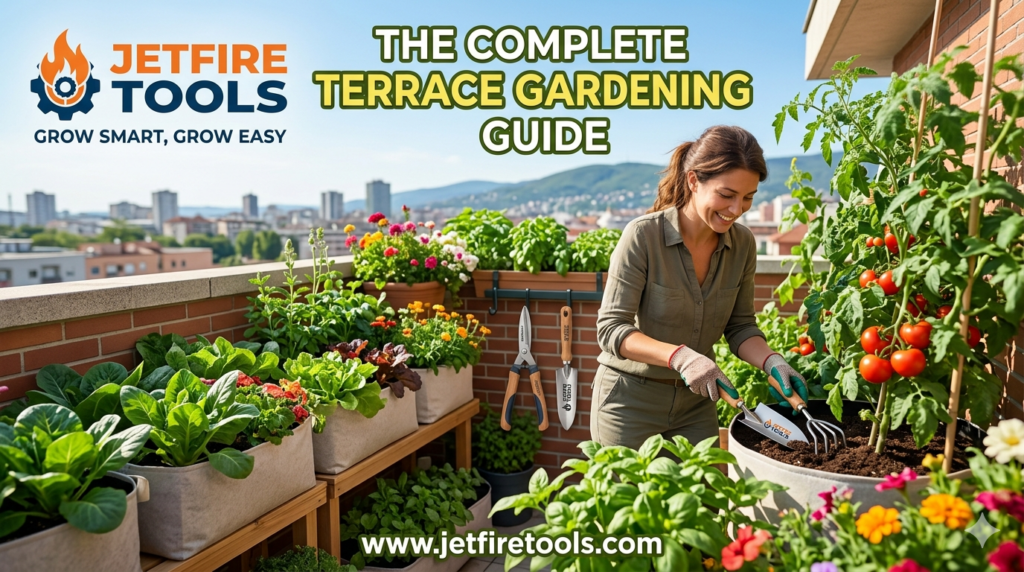
Frequently Asked Questions (Complete Terrace Gardening Guide)
1. What is terrace gardening and how does it work?
Terrace gardening is the practice of growing plants, vegetables, fruits, and flowers on the rooftop of a building using containers, grow bags, or raised beds. It works by creating an artificial growing environment where soil, sunlight, water, and nutrients are carefully managed. With proper planning, even a small terrace can be transformed into a productive and beautiful green space.
2. Is terrace gardening suitable for beginners?
Yes, terrace gardening is perfect for beginners. You don’t need prior experience to start. Begin with easy-to-grow plants like spinach, coriander, mint, and tomatoes. Focus on basic care such as proper watering, sunlight, and soil quality. As you gain confidence, you can expand your garden with more varieties.
3. How much space is required for terrace gardening?
You don’t need a large terrace to start. Even a small 50–100 sq. ft. space is enough to grow vegetables and herbs. Vertical gardening techniques like wall planters and hanging pots can help maximize limited space efficiently.
4. How much sunlight is required for terrace gardening?
Most vegetable plants require 5–7 hours of direct sunlight daily. Leafy greens can grow in partial shade, but fruiting plants like tomatoes, chillies, and brinjal need full sunlight for better yield.
5. Which containers are best for terrace gardening?
Grow bags, plastic pots, clay pots, and recycled containers all work well. Grow bags are especially popular because they are lightweight, affordable, and provide good drainage. Always ensure containers have proper drainage holes to prevent root rot.
6. What is the best soil mix for terrace gardening?
A balanced soil mix is essential for healthy plant growth. A recommended mix is:
- 40% garden soil
- 30% compost
- 20% cocopeat
- 10% sand
This mixture ensures proper aeration, drainage, and nutrient availability.
7. How often should I water terrace plants?
Watering depends on weather, plant type, and soil condition. In summer, plants may need daily watering, while in winter, watering frequency decreases. Instead of following a fixed schedule, check the soil moisture regularly.
👉 For a deeper understanding, read: best watering schedule for plants in summer
8. Which plants are best for terrace gardening in India?
Some beginner-friendly plants include:
- Tomato
- Chilli
- Spinach
- Coriander
- Mint
- Brinjal
You can also grow climbers like cucumbers and gourds once you gain experience.
9. What tools are essential for terrace gardening?
Basic tools include a hand trowel, pruner, watering can, gloves, and a spray bottle. Using high-quality tools improves efficiency and reduces effort.
👉 You can explore durable options at www.jetfiretools.com for reliable gardening tools in India.
10. How do I control pests in terrace gardening naturally?
Natural pest control methods are safe and effective. Use neem oil spray, soap water solution, or manually remove pests. Regular inspection of plants helps prevent infestations early.
👉 Learn more: common plant diseases and solutions
11. Can I grow fruits on my terrace?
Yes, many fruits can be grown in containers such as lemon, guava, pomegranate, and strawberries. However, they require larger pots, proper sunlight, and regular feeding.
12. How do I protect my terrace garden during monsoon?
Ensure proper drainage to avoid waterlogging. Use raised pots, avoid overwatering, and protect plants from heavy rainfall using shade nets or temporary covers.
13. What are the common mistakes in terrace gardening?
Common mistakes include overwatering, poor drainage, using low-quality soil, ignoring pests, and overcrowding plants. Avoiding these mistakes can significantly improve your gardening success.
14. Is organic terrace gardening possible?
Yes, terrace gardening can be completely organic. Use natural fertilizers like compost, vermicompost, and neem cake. Avoid chemical pesticides and rely on eco-friendly solutions.
15. Does terrace gardening damage the building?
No, if done correctly. Use waterproofing, trays under pots, and proper drainage systems to prevent water leakage and structural issues.
16. What are the benefits of terrace gardening?
Terrace gardening offers multiple benefits:
- Fresh, chemical-free vegetables
- Reduced indoor temperature
- Better air quality
- Stress relief and mental well-being
17. How long does it take to grow vegetables on a terrace?
Most leafy greens grow within 3–4 weeks, while vegetables like tomatoes and chillies take 2–3 months to produce yield.
18. Can I do terrace gardening without direct sunlight?
Yes, but plant selection will be limited. You can grow shade-loving plants like lettuce, spinach, and herbs. However, fruiting plants require direct sunlight.
19. How do I start terrace gardening step by step?
Start by assessing sunlight, choosing containers, preparing soil, selecting plants, and setting up a watering routine. Gradually expand your garden as you gain experience.
20. Where can I find the best tools for terrace gardening in India?
Choosing the right tools is crucial for success. You can find high-quality, durable gardening tools designed for Indian conditions at:
👉 www.jetfiretools.com
Master urban farming with our complete terrace gardening guide. Learn expert secrets on soil mix, waterproofing, and high-yield organic crops to create a lush rooftop sanctuary. complete terrace gardening guide, rooftop gardening India, organic terrace farming, best plants for terrace garden, terrace garden soil mix, jetfire tools gardening guide.
Discover the complete terrace gardening guide with practical tips, tools, plant selection, and expert insights. Learn how to transform your rooftop into a productive green paradise using the best gardening tools from JetFire Tools. complete terrace gardening guide, terrace gardening India, rooftop gardening tips, terrace garden setup, best gardening tools India, container gardening terrace, organic gardening terrace, JetFire Tools, terrace gardening beginners, urban gardening India.
Discover more from Leading Garden Tools Manufacturer & Supplier in India
Subscribe to get the latest posts sent to your email.
Pingback: 6 Revolutionary Smart Gardening Gadgets and Technology: Transform Your Garden with Powerful, Future-Ready Tools
Pingback: How to Grow Organic Vegetables at Home: 10 Easy Steps for a Bountiful Harvest