
Best Pots for Terrace Garden in India (Complete Expert Guide)
Table of Contents
Best Pots for Terrace Garden
Terrace gardening completely changed the way I look at food, plants, and even daily stress. When I started, I thought seeds and soil were everything. But after a few failed crops and water leakage issues, I realized something very important — your choice of pots can make or break your terrace garden.
In India, where climate varies from extreme heat to heavy monsoons, choosing the right pots for terrace gardening is not just about looks — it’s about durability, drainage, weight, and plant health.
In this detailed guide, I’ll share everything I’ve learned from real experience — what works, what fails, and what actually gives results.
Setting up a terrace garden in India is a dream for many urban dwellers. There is something profoundly satisfying about stepping onto your roof and being greeted by the scent of wet earth and the sight of vibrant green leaves. However, as an experienced gardener, I can tell you that the foundation of a successful rooftop oasis isn’t just the seeds or the soil—it’s the pots you choose.
In India, our terrace gardens face unique challenges: scorching 45°C summers, heavy monsoon downpours, and the critical concern of structural weight. Choosing the best pots for terrace garden use requires a balance of aesthetics, plant health, and building safety.
In this comprehensive guide, I’ll walk you through the top-rated pots available in the Indian market, based on years of hands-on experience and trial-and-error.
Why Choosing the Right Pots Matters
Before we dive into the materials, let’s talk about why you can’t just pick any random container. A terrace is a limited ecosystem. Unlike ground gardening, your plants depend entirely on the pot for drainage, temperature regulation, and root space.
Moreover, weight is your biggest enemy. A standard 12-inch terracotta pot, when filled with wet soil, can weigh significantly. Multiply that by 50 pots, and you’re putting a massive load on your roof. This is why selecting lightweight yet durable options is the gold standard for Indian terrace gardening.
Most beginners ignore this, but pot selection directly affects:
- Root development
- Water retention
- Drainage efficiency
- Plant growth speed
- Terrace safety (load-bearing capacity)
If you’re planning your setup, I highly recommend reading our detailed guide on terrace gardening setup cost in India, where I’ve explained how pot choices impact budget and long-term maintenance.
Types of Pots for Terrace Garden in India
Let’s break down the most popular and effective options available in India.
1. Clay Pots (Traditional & Breathable)
Clay pots are the most commonly used containers in Indian homes.
My Experience:
When I started growing tomatoes and tulsi, clay pots gave the healthiest root system. But in peak summer, I noticed faster water loss.
Pros:
- Excellent air circulation
- Prevents root rot
- Eco-friendly
Cons:
- Heavy
- Breakable
- Dries quickly in summer
Best For:
- Herbs (Tulsi, Mint, Coriander)
- Indoor plants
- Flowering plants
2. Plastic Pots (Lightweight & Affordable)
Plastic pots are extremely popular among terrace gardeners in India.
My Experience:
For my terrace setup, plastic pots helped reduce weight load significantly. Especially useful when you’re managing 50+ containers.
Pros:
- Lightweight
- Budget-friendly
- Retains moisture
Cons:
- Poor aeration
- Can heat up in summer
Best For:
- Beginners
- Leafy vegetables
- Small plants
3. Grow Bags (Best Choice for Terrace Gardening)
If you ask me personally, grow bags are the best pots for terrace garden in India.
My Experience:
Switching to grow bags increased my vegetable yield by almost 30%. Especially for potatoes and tomatoes.
Pros:
- Excellent drainage
- Lightweight
- Foldable & reusable
- Prevents root circling
Cons:
- Shorter lifespan than plastic
- Needs proper placement
Best For:
- Vegetables (Tomato, Potato, Brinjal)
- Fruits (Papaya, Lemon in large bags)
👉 You can also improve results by using the best soil mix for pots in India, which plays a huge role in grow bag success.
4. Cement Pots (Durable but Heavy)
These are long-lasting but require planning.
My Experience:
I used cement pots for permanent plants like curry leaf and guava. They work great but are hard to move.
Pros:
- Extremely durable
- Weather resistant
Cons:
- Very heavy
- Poor drainage unless modified
Best For:
- Trees and large plants
- Permanent setup
5. Metal Pots (Stylish but Risky)
These look modern but need caution.
My Experience:
I tried metal containers once — they overheated quickly and damaged roots.
Pros:
- Attractive
- Durable
Cons:
- Heat absorption
- Rust issues
Best For:
- Decorative plants only
6. Wooden Planters (Premium Look)
Perfect for aesthetic terrace gardens.
My Experience:
Wooden boxes gave my terrace a premium look but required waterproof lining.
Pros:
- Natural appearance
- Good insulation
Cons:
- Expensive
- Requires maintenance
Best Pots Based on Plant Type
Choosing pots based on plants is smarter than choosing randomly.
For Vegetables
- Grow bags (12–24 inch)
- Large plastic pots
For Flowering Plants
- Clay pots
- Decorative ceramic pots
For Fruit Plants
- Large grow bags
- Cement pots
Climate-Based Pot Selection in India
India’s climate demands smart choices.
Summer:
- Avoid metal pots
- Use light-colored containers
Monsoon:
- Ensure strong drainage
- Elevate pots
Winter:
- Almost all pots work well
Common Mistakes to Avoid
From my early failures, here are things you must avoid:
- Using pots without drainage holes
- Overloading terrace with heavy containers
- Ignoring pot size
- Using cheap plastic that cracks in sun
If you’re serious about gardening success, also check our guide on how to prevent plant diseases naturally, where container hygiene plays a major role.
Drainage Tips (Game-Changer)
No matter how good your pot is, poor drainage will kill your plants.
My Method:
- Bottom layer: stones
- Middle: coarse sand
- Top: nutrient-rich soil
Best Pot Sizes for Terrace Gardening
| Plant Type | Ideal Pot Size |
|---|---|
| Herbs | 6–8 inches |
| Leafy Greens | 8–10 inches |
| Vegetables | 12–18 inches |
| Fruit Plants | 18–24 inches |
Cost of Pots in India (Approx)
- Clay pots: ₹50–₹300
- Plastic pots: ₹30–₹200
- Grow bags: ₹80–₹500
- Cement pots: ₹300–₹1500
Budget planning becomes easier if you read our terrace gardening setup cost in India guide.
My Personal Recommendation (After Years of Gardening)
If you want a practical, high-yield terrace garden:
👉 Use 70% grow bags + 20% plastic pots + 10% clay pots
This combination gives:
- Lightweight setup
- Better yield
- Cost efficiency
Material Comparison Table for Indian Conditions
| Material | Weight | Durability | Heat Resistance | Best For |
| HDPE Grow Bags | Ultra-Light | High (UV Protected) | Excellent | Vegetables & Herbs |
| Plastic | Light | Medium to High | Moderate | Seasonal Flowers |
| Terracotta | Heavy | Low (Fragile) | Best | Perennials (Tulsi, Aloe) |
| Ceramic | Very Heavy | High | Good | Decorative Plants |
| Metal | Medium | High | Poor (Heats up) | Succulents (in shade) |
Weight Management: The Golden Rule of Rooftop Gardening
One mistake I often see beginners make is ignoring the “Dead Load” on the slab. To keep your terrace safe:
- Use Lightweight Media: Instead of pure garden soil, use a mix of 50% Cocopeat, 30% Vermicompost, and 20% soil. This reduces pot weight by almost 40%.
- Elevation is Key: Use sturdy metal pot stands to keep pots off the floor. This prevents dampness from seeping into your roof slab and allows for easy cleaning.
- Group Wisely: Keep heavier pots near the edges or over supporting pillars.
Essential Tools for Maintaining Your Terrace Pots
Buying the best pots is only half the battle. Maintaining the soil health inside those pots is where the real work happens. On a terrace, soil nutrients wash away faster due to frequent watering.
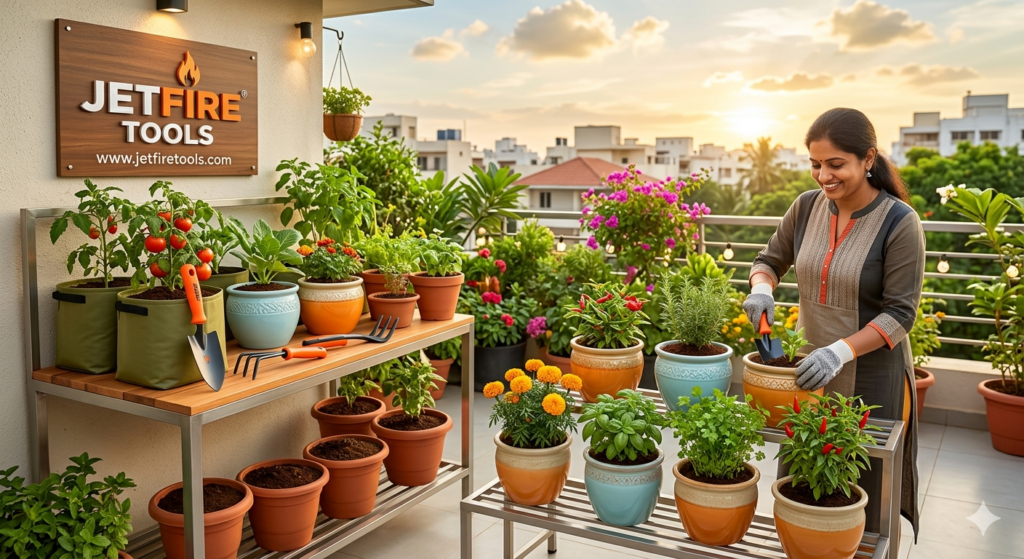
I personally rely on a good Garden Tool Set to keep my pots in top shape. Using a weeder to remove unwanted growth and a cultivator to aerate the top layer of soil ensures that your plants in HDPE bags or plastic pots thrive just as well as they would in the ground.
Expert Tips for Choosing Pots Based on Indian Seasons
- Summer (March-June): Avoid dark-colored plastic pots as they absorb heat and can “cook” the roots. Stick to light-colored grow bags or traditional terracotta.
- Monsoon (July-September): Ensure your pots have extra drainage holes. If you use plastic pots, you might need to drill a few extra holes using a hot metal rod to prevent waterlogging.
- Winter (October-February): This is the time for blooming marigolds and petunias. Small 8-inch to 10-inch plastic pots are perfect for these seasonal beauties.
Final Thoughts
Terrace gardening in India is not just a hobby — it’s a lifestyle upgrade. And choosing the best pots for terrace garden is the foundation of your success.
If I had to start again, I wouldn’t waste time experimenting randomly. I would directly go with grow bags and a proper soil mix.
Because in gardening, small decisions create big results. Always use JetFire Tools to manage your farm, our garden tools are durable and easy to use.
FAQs – Best Pots for Terrace Garden in India
1. Which are the best pots for terrace garden in India for beginners?
For beginners, the best pots are plastic pots and grow bags. When I started terrace gardening, I made the mistake of choosing heavy and expensive containers, which made rearranging my setup difficult. Plastic pots are lightweight, affordable, and easy to manage, while grow bags offer excellent drainage and root development.
Grow bags, especially, are beginner-friendly because they reduce the risk of overwatering — one of the most common mistakes new gardeners make. If you’re just starting out, begin with 10–12 grow bags and a few plastic pots, and gradually expand your setup.
2. Are grow bags better than traditional pots for terrace gardening?
Yes, in most Indian conditions, grow bags are better than traditional pots for terrace gardening. They provide superior aeration, prevent root circling, and ensure proper drainage — all of which are critical in India’s hot and humid climate.
From my experience, plants grown in grow bags show faster growth and better yield, especially vegetables like tomatoes, potatoes, and brinjal. However, they may not last as long as plastic or cement pots, so replacing them every 2–3 years is necessary.
3. What size pots are ideal for terrace gardening in India?
The ideal pot size depends on the type of plant you want to grow. A common mistake I made early on was using small pots for large plants, which restricted root growth.
Here’s a practical guide:
- Herbs: 6–8 inches
- Leafy vegetables: 8–10 inches
- Fruiting vegetables: 12–18 inches
- Fruit plants: 18–24 inches
Using the correct pot size ensures better root expansion, nutrient absorption, and overall plant health.
4. Which pots are best for growing vegetables on a terrace?
For vegetables, grow bags and large plastic pots are the best options. Grow bags are especially useful because they promote healthy root systems and improve yield.
In my terrace garden, switching to 15–18 inch grow bags significantly improved production of tomatoes and chillies. If you’re serious about growing your own food, combining the right pot with the perfect soil mix for terrace plants will give you the best results.
5. Are clay pots good for terrace gardening in India?
Clay pots are excellent for plant health because they allow air and moisture exchange. However, they come with some limitations.
In my experience, clay pots work best for herbs and flowering plants but are not ideal for terrace setups with many containers due to their weight and fragility. They also dry out quickly during peak Indian summers, requiring frequent watering.
6. Can I use cement pots on my terrace?
Yes, but only with proper planning. Cement pots are extremely durable and suitable for large plants like fruit trees. However, they are very heavy and can put stress on your terrace structure.
I recommend using cement pots only for permanent plants and limiting their number. Before using them, ensure your terrace can handle the load safely.
7. Which pots are best for hot weather in India?
In hot climates, choosing the right pot can prevent plant stress and water loss.
From my experience:
- Grow bags perform best due to breathability
- Light-colored plastic pots reduce heat absorption
- Avoid metal pots completely
Heat-resistant containers help maintain soil temperature and protect roots from damage.
8. How important is drainage in terrace gardening pots?
Drainage is absolutely critical. Even the best pot will fail if it doesn’t drain water properly.
In my early days, I lost several plants due to waterlogging. Now, I always ensure:
- Multiple drainage holes
- A base layer of stones
- Well-draining soil mix
Proper drainage prevents root rot and improves plant health significantly.
9. What are the cheapest pots for terrace gardening in India?
If you are on a budget, the most affordable options are:
- Plastic pots
- Recycled containers (buckets, drums)
- Basic grow bags
When I started, I used old paint buckets with drilled holes — and they worked surprisingly well. You don’t need expensive pots to start a successful terrace garden.
10. How many pots can I safely keep on a terrace?
This depends on your terrace’s load-bearing capacity. Overloading is a serious mistake that many gardeners overlook.
As a general rule:
- Use lightweight containers like grow bags
- Avoid too many cement pots
- Distribute weight evenly
If you’re planning a large setup, refer to a complete terrace gardening budget guide to balance cost and safety.
11. Which pots are best for flowering plants on terrace?
For flowering plants, clay pots and decorative ceramic pots work best. They provide good aeration and enhance the overall look of your terrace.
In my garden, roses and marigolds performed exceptionally well in clay pots. However, ensure regular watering during summer.
12. Do pot colors affect plant growth?
Yes, pot color can influence soil temperature.
- Dark-colored pots absorb more heat
- Light-colored pots reflect heat
In Indian summers, I prefer light-colored containers or grow bags to prevent overheating of roots.
13. How long do grow bags last in India?
Grow bags typically last 2–3 years, depending on quality and exposure to sunlight.
To extend their life:
- Avoid dragging them
- Keep them slightly elevated
- Store properly during off-season
Despite their shorter lifespan, their benefits outweigh this limitation.
14. Can I reuse old pots for terrace gardening?
Yes, reusing pots is a great idea, but they must be cleaned properly.
Before reusing:
- Wash thoroughly
- Disinfect with mild solution
- Replace old soil
This helps prevent the spread of diseases. You can also learn more about protecting plants from diseases naturally to keep your garden healthy.
15. What is better: pots or raised beds for terrace gardening?
Both have their advantages, but for most Indian homes, pots are more practical.
Pots are:
- Flexible
- Easy to manage
- Suitable for small spaces
Raised beds require more planning, weight consideration, and investment. For beginners, pots are the better choice.
16. Which pots are best for small terrace or balcony gardens?
For small spaces:
- Vertical planters
- Hanging pots
- Small grow bags
I’ve personally used railing planters to maximize space, and they work brilliantly for herbs and leafy greens.
17. How to arrange pots on a terrace garden efficiently?
Efficient arrangement improves sunlight exposure and plant growth.
My approach:
- Keep tall plants at the back
- Medium plants in the middle
- Small plants in front
Also, leave enough walking space to maintain your garden easily.
18. Do expensive pots improve plant growth?
No, expensive pots do not guarantee better plant growth. What matters most is:
- Drainage
- Soil quality
- Sunlight
I’ve grown excellent vegetables in simple grow bags and even recycled containers.
19. How to prevent pots from heating up in summer?
To reduce heat:
- Use mulch on soil surface
- Choose light-colored pots
- Water in early morning
These small steps can make a big difference during extreme Indian summers.
20. What is the best combination of pots for terrace gardening?
Based on practical experience, the ideal combination is:
- 60–70% grow bags
- 20–30% plastic pots
- 5–10% clay or decorative pots
This mix gives you the perfect balance of productivity, cost efficiency, and aesthetics.
Efficient arrangement of pots in a terrace garden is crucial for maximizing sunlight exposure and promoting healthy plant growth. It is essential to leave sufficient walking space to facilitate easy maintenance of your garden. Regarding the choice of containers, the best pots for terrace garden in India should prioritize functionality and drainage rather than cost. Practical experience shows that a diverse mix of pots can achieve an optimal balance of productivity, cost efficiency, and visual appeal.
Discover the best pots for terrace garden in India with expert insights, real experience, and practical tips. Learn how to choose the right pots for vegetables, flowers, and fruits to boost plant growth and terrace aesthetics. Best pots for terrace garden in India, best pots for terrace garden. terrace gardening pots India, pots for terrace garden vegetables, container gardening India, grow bags vs pots India. plastic pots vs clay pots India, best containers for plants India, terrace garden setup India, gardening pots India. balcony garden pots India, rooftop gardening containers India.
10 Best Pots for Terrace Garden in India: Transform Your Rooftop Effortlessly! Meta Description: Discover the best pots for terrace garden in India! From lightweight HDPE grow bags to stylish ceramic and durable plastic, find the perfect planters for your rooftop oasis. Best pots for terrace garden in India, best pots for terrace garden, terrace garden planters, lightweight pots for rooftop. HDPE grow bags India, terracotta vs plastic pots, Jetfire gardening tools.
Discover more from Leading Garden Tools Manufacturer & Supplier in India
Subscribe to get the latest posts sent to your email.
Pingback: 10 Common Beginner Mistakes in Gardening You Must Avoid for a Thriving Garden (Pro Tips Inside)
Pingback: 10 Essential Tools Needed for Home Gardening (Complete Guide for Beginners & Experts)
Pingback: How to Keep Birds Away from Plants Naturally (100% Effective Tips for Garden Success)
Pingback: Master How to Grow Chili Plants in Pots: 7 Proven Secrets for a Huge Harvest!
Pingback: Low Maintenance Gardening Equipment For Easy Gardening In India | Powerful Smart Garden Tools GuideDiscover The Best Low Maintenance Gardening Equipment For Indian Gardeners. Learn Smart Gardening Techniques, Essential Tools, Expert Tips, Common Mistakes,