
Best Soil Mix for Pots in India (Complete Practical Guide)
Table of Contents
Best Soil Mix for Pots in India
When I started gardening, I thought soil is just… soil. I took some मिट्टी from nearby land, filled my pots, planted seeds—and waited.
Nothing happened.
Some plants didn’t grow. Others turned yellow within days. That’s when I realized something most beginners ignore:
👉 The success of your garden depends more on your soil mix than your seeds.
If you get the soil right, 70% of your gardening problems disappear automatically.
In this guide, I’ll share the best soil mix for pots in India, based on real experience, Indian weather conditions, and what actually works in terrace and balcony gardening.
If there is one thing I have learned over years of manufacturing agricultural equipment and tending to my own terrace garden, it’s this: Your plants are only as healthy as the soil they live in. In a container, the soil is the plant’s entire world. Unlike a field where roots can travel deep to find moisture or nutrients, a pot is a closed system. If the soil is too hard, the roots suffocate. If it stays too wet, they rot.
In the Indian climate—where we swing from 45°C summers to torrential monsoons—a “standard” potting mix often fails. After testing countless combinations, I’ve found a “Golden Ratio” that works specifically for our unique environmental stressors. This isn’t just a recipe; it’s a lifestyle for your plants.
1. Why “Normal” Garden Soil Fails in Pots
The most common mistake I see beginners make is digging up “Mitti” (soil) from their backyard and stuffing it into a plastic pot. In the ground, soil has earthworms, natural drainage, and vast microbial networks. In a pot, that same soil becomes a brick.
When you water ordinary clay-heavy Indian soil in a container, it compacts. This pushes out all the oxygen. Without air, the roots cannot perform “respiration,” and your plant essentially drowns while standing in water. This is why we need a “soilless” or “amended” mix. We want something lightweight, airy, and nutrient-dense.
2. The JetFire “Golden Trio” Recipe
For a versatile, all-purpose mix that suits everything from your kitchen herbs to your flowering Hibiscus, I recommend this balanced ratio:
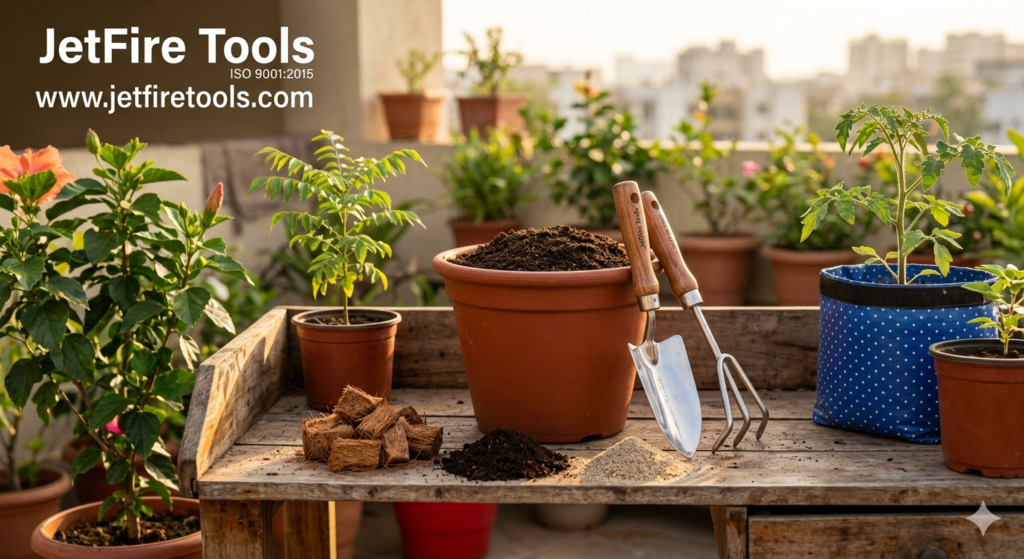
- 40% Cocopeat (The Sponge): This holds moisture without making the soil soggy. It’s lightweight and sustainable.
- 30% Vermicompost (The Fuel): Often called “Black Gold,” this provides the slow-release nitrogen your plants crave.
- 20% Fine River Sand or Perlite (The Lungs): This ensures that excess water drains out immediately.
- 10% Garden Soil (The Body): A little bit of local soil helps provide mineral stability.
The “Secret Sauce” Additive: Always mix in two tablespoons of Neem Cake Powder per pot. In India, soil-borne fungi and pests are aggressive. Neem cake acts as a natural pesticide and a mild fertilizer simultaneously.
3. Mastering the Texture: The Squeeze Test
Before you start planting, I want you to try something I call the “Squeeze Test.” Take a handful of your moistened soil mix and squeeze it into a ball.
- If it crumbles immediately, it’s too sandy (needs more compost).
- If it stays in a hard, muddy ball, it’s too heavy (needs more sand or cocopeat).
- The Goal: It should hold its shape for a second, then fall apart with a gentle poke.
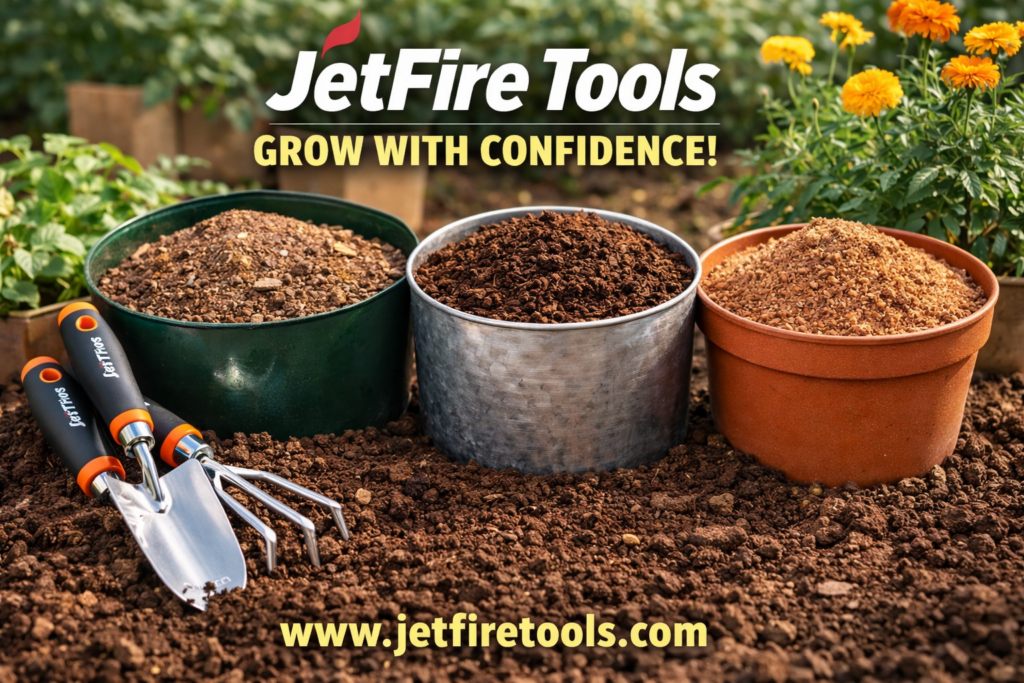
When mixing these ingredients, don’t use your bare hands for large batches. I personally use the JetFire Hand Cultivator to blend the components. It ensures the Neem cake and Vermicompost are distributed evenly without leaving “hot spots” of fertilizer that could burn young roots.
4. Customizing for the Indian Seasons
Our soil needs to behave differently depending on the month. This is an insight you won’t find in generic Western gardening blogs.
- Summer Prep (April–June): Increase the Cocopeat to 50%. The intense Indian sun evaporates water in hours. You need that extra water retention to keep the roots cool.
- Monsoon Prep (July–September): This is the danger zone. Increase the Sand or Perlite to 30%. Your pots will be sitting in rain for days, and you need that water to exit the drainage holes as fast as it enters the top.
- Winter Prep (October–February): This is the time to go heavy on the Best Fertilizers for Vegetable Gardening. Add extra Vermicompost or well-rotted cow manure to fuel the growth of winter greens like Spinach and Mustard.
5. The Importance of Drainage Layers
No matter how good your soil mix is, it won’t work if the hole at the bottom of the pot is blocked. I always place a few broken pieces of “Gada” (terracotta pot shards) or large pebbles over the drainage hole before adding the soil. This prevents the fine particles of your mix from clogging the exit.
If you are using our UV-Treated Grow Bags, you’ll notice they “breathe” through the sides, which is a massive advantage for root health. However, even with grow bags, a light layer of leca or gravel at the bottom helps maintain that crucial airflow.
6. Aeration: The Forgotten Step
Even the best soil mix will eventually settle and compact over 3–4 months. I make it a habit to “fluff” the top two inches of soil every fortnight. Using a JetFire Hand Fork, gently stir the surface. This breaks the “crust” that forms from hard tap water minerals and allows oxygen to reach the root zone.
I’ve noticed that plants which receive regular aeration grow nearly 30% faster than those left in stagnant soil. It also helps prevent the growth of moss and algae on the surface, which can attract fungus gnats.
7. Reusing and Refreshing Old Soil
You don’t need to throw away soil after a plant dies. However, you must treat it. I spread my old soil on a plastic sheet under the direct afternoon sun for 2 days. This “Solarization” kills harmful pathogens and larvae.
Once solarized, I “re-charge” it by adding 30% fresh Vermicompost and a handful of bone meal. This is a sustainable way to garden without constantly buying new bags of soil. For more on this, check out our Sustainable Gardening Hacks for eco-friendly ways to maintain your terrace.
Pro-Level Soil Insights for Specific Plants
| Plant Type | Special Requirement | Recommended Mix |
| Succulents/Cacti | Zero water retention | 70% Sand/Perlite + 30% Soil |
| Vegetables (Tomato/Chilli) | High Nutrition | 40% Compost + 40% Soil + 20% Cocopeat |
| Flowering (Roses) | Acidic & Rich | Add 10% Leaf Mold + Tea Waste |
| Indoor (Snake Plant) | Airy & Light | 50% Cocopeat + 30% Perlite + 20% Compost |
Why Regular Garden Soil Doesn’t Work in Pots
This is the biggest mistake beginners make.
Normal soil:
- Becomes hard after watering
- Blocks air circulation
- Causes root rot
- Drains poorly
Plants in pots need a light, well-draining, nutrient-rich mix, not heavy ground soil.
👉 If you’re setting up a terrace garden, also read
[terrace gardening setup cost in India] to plan everything properly.
The Perfect Soil Mix Formula (Tried & Tested)
After experimenting with different combinations, here’s the formula that consistently works:
Standard Soil Mix Ratio:
- 40% Garden Soil
- 30% Compost (Organic fertilizer)
- 30% Cocopeat (for aeration and moisture)
This is the best all-purpose soil mix for pots in India.
Understanding Each Ingredient (From Real Experience)
1. Garden Soil (Base Material)
This gives structure to your plants.
But here’s the trick:
Don’t use raw soil directly.
What I do:
- Dry it in sunlight for 2–3 days
- Remove stones and debris
- Break hard chunks
This simple step prevents pests and diseases.
2. Compost (Plant Nutrition)
Compost is where your plants get energy.
You can use:
- Vermicompost
- Cow dung compost
- Kitchen compost
My observation:
Vermicompost works fastest for growth, especially for vegetables.
👉 Combine this with natural care methods from
[how to prevent plant diseases naturally]
3. Cocopeat (Game Changer)
If you skip cocopeat, you’ll regret it.
Why?
- Keeps soil light
- Holds moisture
- Prevents compaction
Before using:
- Soak cocopeat in water
- Fluff it properly
Soil Mix Variations for Different Plants
One mistake I made early on was using the same soil for everything.
Different plants need slightly different mixes.
1. Soil Mix for Vegetables
Vegetables are heavy feeders.
Best Mix:
- 40% soil
- 30% compost
- 20% cocopeat
- 10% sand
This improves drainage and boosts growth.
2. Soil Mix for Flowering Plants
Flowering plants need balanced nutrition.
Best Mix:
- 30% soil
- 30% compost
- 30% cocopeat
- 10% sand
3. Soil Mix for Indoor Plants
Indoor plants are sensitive to overwatering.
Best Mix:
- 30% soil
- 20% compost
- 40% cocopeat
- 10% perlite/sand
4. Soil Mix for Succulents
Succulents need excellent drainage.
Best Mix:
- 30% soil
- 20% compost
- 50% sand/perlite
Ready-Made vs Homemade Soil Mix (Honest Truth)
You’ll find many ready-made potting mixes online.
My Experience:
- Some are good
- Many are overpriced
- Quality is inconsistent
What I recommend:
Make your own mix.
It’s:
- Cheaper
- More reliable
- Customizable
Cost of Soil Mix in India
Here’s a practical cost breakdown:
| Component | Cost (Approx) |
|---|---|
| Garden soil | Free – ₹200 |
| Cocopeat block | ₹150 – ₹400 |
| Compost | ₹200 – ₹600 |
👉 Total: ₹500 – ₹1200 for multiple pots
👉 Also read:
[best gardening tools for beginners in India] to complete your setup.
Common Soil Mistakes Beginners Make
I made almost all of these mistakes:
1. Using Only Garden Soil
Result: Hard soil, no growth
2. Overusing Compost
Too much fertilizer burns roots
3. Ignoring Drainage
Water gets stuck → root rot
4. Not Refreshing Soil
Soil loses nutrients over time
How to Reuse Old Soil (Very Useful Tip)
Don’t throw old soil—it can be reused.
My method:
- Remove roots and debris
- Dry soil in sunlight
- Add fresh compost + cocopeat
- Mix properly
This saves money and improves soil quality.
Soil Care Tips for Indian Climate
India’s weather is extreme, so soil needs care.
Summer:
- Add more cocopeat
- Water carefully
Monsoon:
- Ensure proper drainage
- Avoid waterlogging
Winter:
- Add compost for warmth
My Personal Learning (Important Insight)
The biggest shift in my gardening journey came when I stopped focusing only on plants and started focusing on soil.
Once I improved my soil mix:
- Plants grew faster
- Leaves became greener
- Flowering increased
It felt like magic—but it was just the right foundation.
Conclusion: Soil is the Real Secret
If you remember only one thing from this article, remember this:
👉 Healthy soil = Healthy plants
You don’t need expensive fertilizers or fancy tools if your soil mix is right.
Start simple:
- Use the 40-30-30 formula
- Adjust based on plant type
- Observe and improve
Gardening is not about perfection—it’s about learning and growing along with your plants. Always use JetFire Tools to manage your garden, our garden tools are durable and easy to use.
FAQs – Best Soil Mix for Pots in India
1. What is the ideal soil mix ratio for pots in India?
The most effective and widely used ratio is 40% garden soil + 30% compost + 30% cocopeat. This combination creates a balance between structure, nutrition, and aeration. From my experience, this ratio works for almost 80% of plants, especially in terrace and balcony gardening.
2. Why is cocopeat so important in potting mix?
Cocopeat plays a crucial role in maintaining moisture while keeping the soil light and airy. Without it, soil becomes hard and suffocates plant roots. I noticed a huge difference in plant growth after adding cocopeat—it made watering easier and reduced plant stress, especially during Indian summers.
3. Can I skip compost in my soil mix?
You can, but your plants will struggle. Compost is the main source of nutrients. Without it, plants may grow slowly, leaves may turn yellow, and flowering will reduce. Always include compost, even in small quantities.
4. Which type of compost is best for potting soil in India?
Vermicompost is one of the best options because it is rich in nutrients and improves soil health quickly. Cow dung compost is also good but works slightly slower. If you want faster visible results, vermicompost is the better choice.
5. How do I make potting soil at home easily?
Start by collecting clean garden soil, dry it in sunlight, and remove debris. Then mix it with compost and soaked cocopeat in the right ratio. Use a hand trowel or cultivator to mix everything evenly. Tools from JetFire Tools make this process much easier and less tiring, especially if you’re preparing soil regularly.
6. What is the best soil mix for terrace gardening in India?
Terrace gardening needs lightweight soil that drains well. A mix of soil, compost, and cocopeat works best. You can also add a small amount of sand to improve drainage. Heavy soil should always be avoided on terraces.
7. How can I improve drainage in potting soil?
To improve drainage:
- Add sand or perlite
- Use cocopeat
- Ensure pots have proper holes
Poor drainage is one of the biggest reasons plants die. I learned this after losing several plants due to waterlogging.
8. Can I reuse old potting soil?
Yes, and you should. Remove roots and debris, dry the soil in sunlight, and mix fresh compost and cocopeat. Reusing soil saves money and improves sustainability. Just make sure the soil is pest-free before reuse.
9. How often should I refresh soil in pots?
You should refresh your soil every 2–3 months by adding compost and loosening the mix. For fast-growing plants like vegetables, even monthly feeding helps.
10. What soil mix is best for vegetable gardening in pots?
Vegetables need more nutrients, so a slightly richer mix works best:
- 40% soil
- 30% compost
- 20% cocopeat
- 10% sand
This mix supports faster growth and better yield.
11. Which soil is best for indoor plants in India?
Indoor plants require well-draining soil to avoid root rot. A mix with more cocopeat and less compost works well. Keeping the soil light is the key for indoor success.
12. Why do plants die even after using good soil mix?
Even with a good soil mix, plants can fail due to:
- Overwatering
- Lack of sunlight
- Poor drainage
- Wrong plant selection
Soil is important, but overall plant care matters equally.
13. Is ready-made potting mix better than homemade soil?
Not always. Some ready-made mixes are convenient but expensive and inconsistent in quality. Homemade soil mix is more reliable, customizable, and cost-effective. Personally, I trust my own mix more than store-bought ones.
14. How do I sterilize garden soil before using it?
The easiest method is sun drying. Spread the soil under direct sunlight for 2–3 days. This kills harmful bacteria, pests, and fungi naturally without using chemicals.
15. What is the role of sand in soil mix?
Sand improves drainage and prevents soil from becoming too compact. It is especially useful for succulents and vegetables. However, don’t add too much, as it can reduce nutrient retention.
16. Can I grow plants without cocopeat?
Yes, but growth may not be optimal. Cocopeat improves soil structure significantly. If you don’t have cocopeat, you can partially replace it with leaf compost, but results may vary.
17. How do I know if my soil mix is good?
A good soil mix should:
- Feel light and crumbly
- Drain water quickly
- Retain slight moisture
- Not smell bad
If your soil becomes hard or sticky, it needs improvement.
18. Which tools are useful for preparing soil mix?
Basic tools like a hand trowel, gloves, and cultivator are enough. Using proper tools makes soil preparation faster and more efficient. Many home gardeners prefer JetFire Tools because they are economical, durable, and designed for everyday gardening needs.
19. Is soil mix different for flowers and vegetables?
Yes. Vegetables need more nutrients, while flowering plants need balanced nutrition and better drainage. Adjust compost and sand levels accordingly.
20. How can I make my soil more fertile naturally?
You can improve soil fertility by:
- Adding compost regularly
- Using kitchen waste compost
- Applying neem cake
- Practicing crop rotation
Natural methods work better in the long run and keep your garden chemical-free.
21. Does soil mix change according to seasons in India?
Yes, slightly:
- Summer → Add more cocopeat to retain moisture
- Monsoon → Improve drainage with sand
- Winter → Add compost for nutrients
Adjusting soil seasonally improves plant health significantly.
22. What is the biggest mistake beginners make with soil?
The biggest mistake is using plain garden soil without modification. It leads to poor growth, drainage issues, and plant diseases. Once you fix the soil, everything else becomes easier.
23. How long does a good soil mix last in pots?
A good soil mix can last 6–12 months with proper care. However, nutrients deplete over time, so regular compost addition is necessary.
24. Can I use red soil or black soil for pots in India?
Both can be used, but they must be mixed with compost and cocopeat. Alone, they are too heavy for container gardening.
25. Is organic soil mix better than chemical-based soil?
Yes, organic soil mix is safer, sustainable, and better for long-term plant health. It improves soil structure naturally and supports microbial activity.
Master the art of container gardening! Learn the best soil mix for pots in India with our expert-backed, organic recipes. From Cocopeat to Neem cake, discover how to create a nutrient-rich foundation for your terrace and home garden using JetFire Tools. best soil mix for pots in India, potting soil recipe India, terrace gardening soil mix, indoor plant soil mix India, organic potting mix, cocopeat and vermicompost ratio, JetFire Tools soil preparation, vegetable garden soil India.
Discover the best soil mix for pots in India with this practical, experience-based guide. Learn perfect ratios, ingredients, and tips to grow healthy plants in terrace and balcony gardens. best soil mix for pots in India, potting soil mix India, soil mix for terrace garden India, best potting mix for plants India, homemade soil mix India. garden soil mix ratio India, soil for container gardening India, organic potting mix India, best soil for indoor plants India, soil mixture for vegetables in pots.
Master the art of container gardening! Learn the best soil mix for pots in India with our expert-backed, organic recipes. From Cocopeat to Neem cake, discover how to create a nutrient-rich foundation for your terrace and home garden using JetFire Tools. best soil mix for pots in India, potting soil recipe India, terrace gardening soil mix, indoor plant soil mix India, organic potting mix, cocopeat and vermicompost ratio, JetFire Tools soil preparation, vegetable garden soil India.
Discover more from Leading Garden Tools Manufacturer & Supplier in India
Subscribe to get the latest posts sent to your email.
Pingback: Powerful Organic Fertilizer for Home Garden in India (100% Natural Growth Boost Guide)
Pingback: 10 Common Beginner Mistakes in Gardening You Must Avoid for a Thriving Garden (Pro Tips Inside)
Pingback: Master the Art: How to Grow Coriander at Home for an Incredible Harvest!
Pingback: Powerful Neem Oil Uses for Plants – Complete Guide to Healthy, Pest-Free Garden Naturally
Pingback: How to Water Plants Correctly for Faster Plant Growth | 7 Proven Expert Tips by JetFire Tools