
How to Fix Root Rot: The Complete Real-World Guide (From Experience)
Table of Contents
How to Fix Root Rot: The Ultimate Rescue and Prevention Manual
Root rot is one of those problems that hits silently—and by the time most gardeners notice it, the damage is already underway. I’ve personally lost a few plants early in my gardening journey because I didn’t recognize the signs soon enough. But over time, after rescuing dozens of plants (and yes, killing a few along the way), I’ve developed a reliable system to identify, treat, and completely prevent root rot.
If you’re here searching for how to fix root rot, you’re already on the right track. The good news? In most cases, root rot is reversible—if you act quickly and correctly.
If you are reading this, you are likely staring at a plant that looks thirsty—it’s wilting and drooping—but when you touch the soil, it’s soaking wet. This is the great paradox of root rot. To a gardener, it feels like a personal failure, but in reality, it is usually a mechanical failure of the environment.
Root rot is primarily caused by two things: a lack of oxygen (drowning) or opportunistic fungi like Pythium and Phytophthora that thrive in soggy, anaerobic conditions.
What is Root Rot (And Why It Happens)
Root rot is essentially a fungal or bacterial disease that occurs when roots sit in excess moisture for too long. Healthy roots need oxygen. When soil remains waterlogged, oxygen levels drop, and harmful pathogens thrive.
In my experience, overwatering is the #1 cause, but it’s rarely the only reason. Poor drainage, compacted soil, and wrong pot selection also play a major role.
👉 If you’re unsure about watering, check this guide: Best watering schedule for plants in summer
Early Signs of Root Rot You Should Never Ignore
The biggest mistake I see gardeners make is confusing root rot with underwatering. The symptoms look similar—but the solutions are completely opposite.
Here’s what I’ve learned to watch for:
- Leaves turning yellow despite regular watering
- Soil staying wet for days
- Foul smell from soil (a clear red flag)
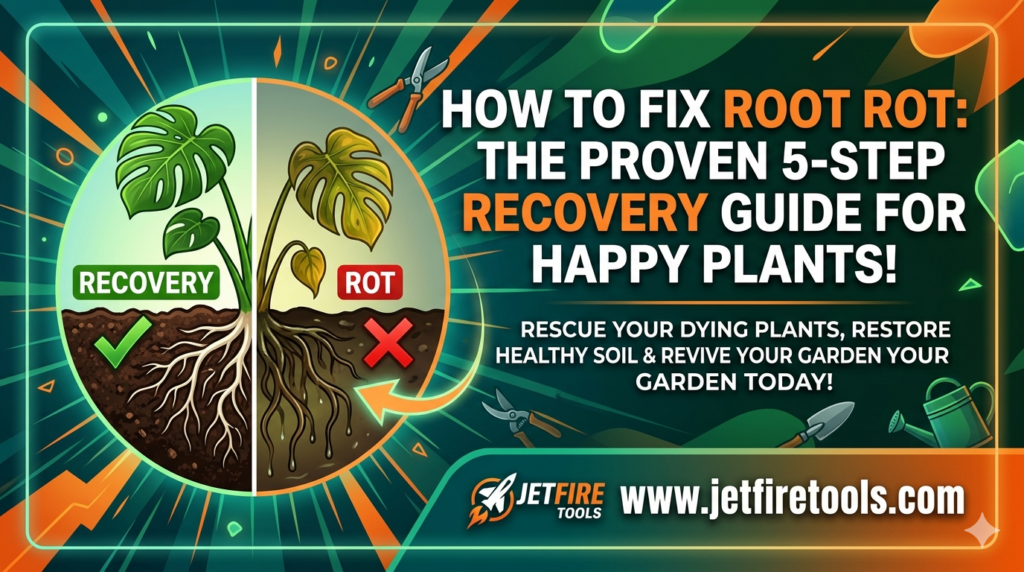
- Mushy, black, or brown roots
- Wilting even when soil is moist
Once you notice 2–3 of these signs together, it’s time to act immediately.
How to Fix Root Rot (Step-by-Step Proven Method)
Let me walk you through the exact process I use. This is not theory—this is what has consistently saved my plants.
Step 1: Remove the Plant from Soil
Gently take the plant out of its pot. Don’t pull harshly—loosen the soil first.
When I do this, I always keep a clean workspace and sharp pruning tool, like those discussed here:
👉 Must-have gardening tools for every gardener
Step 2: Inspect the Roots Carefully
Healthy roots are:
- White or light tan
- Firm and crisp
Rotten roots are:
- Brown/black
- Mushy
- Smelly
This step is crucial. If you skip proper inspection, the rot will come back.
Step 3: Trim All Infected Roots
Using sterilized scissors or pruners, cut off all damaged roots.
Be ruthless here.
I’ve made the mistake of “saving a few questionable roots”—and trust me, it’s not worth it. Infection spreads fast.
Step 4: Wash and Disinfect the Roots
Rinse the roots under clean water. Then dip them in a mild fungicide solution or even a homemade mix (like neem water).
👉 Learn more about natural solutions here: Common plant diseases and solutions
Step 5: Replace the Soil Completely
Never reuse infected soil.
Use:
- Well-draining potting mix
- Add sand or perlite for aeration
I personally prefer mixing cocopeat + compost + sand for balance.
Step 6: Choose the Right Pot
Drainage holes are non-negotiable.
If your pot doesn’t drain well, you’re inviting root rot again.
👉 Related read: Complete terrace gardening guide
Step 7: Replant and Water Lightly
After repotting:
- Water lightly (not heavily)
- Keep plant in indirect sunlight for recovery
Avoid fertilizing immediately—let the plant stabilize first.
Real Insight: The “Recovery Window” Most People Ignore
Here’s something I learned the hard way:
The first 7 days after treatment decide everything.
During this period:
- Don’t overwater
- Avoid direct harsh sunlight
- Monitor leaf condition daily
If new growth appears within 10–14 days, your plant is on the right track.
How Overwatering Leads to Root Rot (And How to Avoid It)
Overwatering is less about “how much” and more about “how often.”
I used to water plants daily thinking I was helping them. In reality, I was suffocating them.
👉 Read this for clarity: Best gardening advice for beginners
Best Soil Mix to Prevent Root Rot
From my experience, the perfect mix includes:
- 40% garden soil
- 30% compost
- 20% sand
- 10% cocopeat
This combination ensures:
- Drainage
- Nutrient retention
- Root aeration
Natural Remedies to Treat Root Rot
If you prefer organic gardening (like I do), try these:
Neem Oil Solution
Acts as a natural antifungal agent.
Cinnamon Powder
Surprisingly effective in preventing fungal growth.
Hydrogen Peroxide (Diluted)
Boosts oxygen in soil and kills bacteria.
Indoor Plants Most Prone to Root Rot
From personal observation, these plants are more sensitive:
- Snake Plant (if overwatered)
- Money Plant
- Peace Lily
- Succulents
👉 Care guide: Indoor plant care tips for beginners
Can a Plant Fully Recover from Root Rot?
Yes—but not always.
Recovery depends on:
- How early you detect it
- How much root damage occurred
- Post-treatment care
If at least 30–40% healthy roots remain, chances are good.
Common Mistakes That Make Root Rot Worse
Let me save you from errors I’ve made:
- Reusing infected soil
- Watering immediately after repotting heavily
- Keeping plant in low light
- Not sterilizing tools
Recommended Tools for Root Rot Treatment
Using the right tools makes a huge difference.
I personally rely on:
- Sharp pruning shears
- Soil testers
- Aeration tools
👉 Explore: Top gardening tools for healthy plants
Prevention is Always Better Than Cure
After dealing with root rot multiple times, I now focus more on prevention:
- Check soil moisture before watering
- Use breathable pots
- Improve drainage
- Avoid heavy clay soil
Why Prevention is the Best Cure
In my experience at JetFire Tools, we focus on the “Prevention First” philosophy. Root rot is a symptom of a suffocating environment.
1. The Finger Test: Never water on a schedule. Stick your finger 2 inches into the soil. If it feels moist, put the watering can down. 2. Use the Right Tools: A heavy-duty garden fork is essential for breaking up compacted soil in outdoor beds, allowing water to move through rather than sit on top. 3. Quality over Quantity: Invest in high-quality potting mixes. Cheap soil often turns into “brick” after a few months, trapping moisture and killing roots.
By following these steps, you aren’t just fixing a problem; you are becoming a more intuitive gardener. Your plants will thank you with vibrant green growth and stronger stems.
Happy Gardening from the JetFire Team!
Final Thoughts (From Real Experience)
Root rot feels devastating—but it’s also one of the most educational experiences in gardening.
Once you handle it successfully, your confidence as a gardener increases massively.
The key lesson I’ve learned is simple:
👉 Plants don’t die from lack of care—they often die from too much of it.
Control watering, improve soil, and observe your plants closely—and you’ll rarely face root rot again. Always use JetFire Tools to manage your farm, for home use you can order tools from www.jetfire.in. To know more visit our website www.jetfiretools.com
FAQ: How to Fix Root Rot (Expert Answers)
Q1: What is the fastest way to fix root rot?
The fastest and most effective way to fix root rot is to immediately remove the plant from its pot, cut off all infected roots, wash the remaining healthy roots, and repot the plant in fresh, well-draining soil. In my experience, speed matters more than anything—delaying even a couple of days can allow the rot to spread further. Always use sterilized tools and avoid watering heavily after repotting.
Q2: Can a plant recover completely from root rot?
Yes, a plant can fully recover from root rot if enough healthy roots remain. From what I’ve observed, if at least 30–50% of the root system is still firm and white, the plant has a strong chance of survival. However, recovery depends heavily on aftercare—especially proper watering and light conditions during the first two weeks.
Q3: How do I know if my plant has root rot or just needs water?
This is one of the most common confusions. Both conditions cause wilting, but the difference lies in the soil and roots. If the soil is wet and the plant is still drooping, root rot is likely. You may also notice a foul smell. In contrast, underwatered plants have dry soil and perk up quickly after watering.
Q4: Should I water my plant after treating root rot?
After repotting, you should water lightly—just enough to settle the soil. Avoid soaking the plant immediately. I usually wait until the top layer of soil dries out before watering again. Overwatering at this stage can undo all your efforts.
Q5: Can I reuse soil affected by root rot?
No, it’s not recommended. Infected soil contains fungi and bacteria that can quickly reinfect your plant or spread to others. Always discard old soil and use a fresh, well-draining mix. This is a mistake I made early on—and it cost me more plants than I’d like to admit.
Q6: What does root rot smell like?
Root rot typically produces a foul, musty, or rotten smell—similar to decaying organic matter. If you notice this odor coming from your pot, it’s a strong indicator that something is wrong below the surface.
Q7: Can root rot spread to other plants?
Yes, root rot can spread, especially if you use the same tools, pots, or soil. Cross-contamination is very real in gardening. Always sterilize your tools and isolate infected plants until they recover.
Q8: What are the main causes of root rot?
The primary cause is overwatering, but it’s usually combined with other factors like poor drainage, compact soil, or lack of airflow. In my experience, root rot is rarely caused by just one issue—it’s often a combination of small mistakes.
Q9: How long does it take to fix root rot?
Recovery time varies depending on the severity. Mild cases may recover in 1–2 weeks, while severe cases can take a month or more. You’ll know your plant is improving when you see new growth or firmer leaves.
Q10: Can I use hydrogen peroxide to treat root rot?
Yes, diluted hydrogen peroxide can help kill harmful bacteria and increase oxygen levels in the soil. I’ve used a mix of 1 part hydrogen peroxide to 3 parts water with good results. However, it should be used sparingly—not as a regular treatment.
Q11: Is sunlight important during recovery?
Yes, but it should be indirect. Direct sunlight can stress an already weakened plant. I usually place recovering plants in bright, indirect light to support gentle growth without causing further damage.
Q12: Which plants are most prone to root rot?
Plants that require less water or have sensitive roots are more prone. These include succulents, snake plants, peace lilies, and money plants. Ironically, these are also the plants people tend to overwater the most.
Q13: Can root rot happen in indoor plants?
Absolutely. In fact, indoor plants are more vulnerable because they often have limited drainage and airflow. Overwatering indoors is one of the most common reasons people face root rot issues.
Q14: Should I fertilize a plant after root rot treatment?
No, avoid fertilizing immediately after treatment. The roots are already stressed and may not handle nutrients well. Wait at least 2–3 weeks until you see signs of recovery before applying any fertilizer.
Q15: Can root rot kill a plant completely?
Yes, if left untreated, root rot can destroy the entire root system and kill the plant. That’s why early detection and quick action are critical.
Q16: What type of soil prevents root rot?
Well-draining soil is key. A mix of garden soil, compost, sand, and cocopeat works well. The goal is to ensure water doesn’t sit around the roots for too long.
Q17: Can I save a plant with severe root rot?
Sometimes, yes. If most roots are damaged, you can try propagating the healthy parts of the plant (like stems or leaves). This has saved a few of my favorite plants when the roots were beyond repair.
Q18: How often should I water to avoid root rot?
There’s no fixed schedule—it depends on the plant, soil, and climate. The best method is to check the soil moisture before watering. If the top 1–2 inches are dry, then water.
Q19: Do pots without drainage holes cause root rot?
Yes, they are one of the biggest risk factors. Without drainage holes, excess water has nowhere to go, leading to waterlogged soil and root rot.
Q20: Can root rot come back after treatment?
Yes, if the underlying cause isn’t fixed. If you continue overwatering or use poor soil, the problem will return. Prevention is just as important as treatment.
Q21: Is root rot caused by fungus or bacteria?
Root rot can be caused by both fungi and bacteria. Common fungal pathogens include Pythium and Phytophthora. Regardless of the cause, the treatment process remains largely the same.
Q22: Can I prevent root rot completely?
You can’t guarantee 100% prevention, but you can reduce the risk significantly by:
- Watering correctly
- Using well-draining soil
- Ensuring proper drainage
- Monitoring plant health regularly
Q23: Why are my plant leaves turning yellow after watering?
Yellow leaves after watering often indicate overwatering and possible root rot. This happens because damaged roots can’t absorb nutrients properly.
Q24: Should I prune leaves when treating root rot?
Yes, trimming some leaves can help reduce stress on the plant. With fewer leaves to support, the plant can focus on regrowing healthy roots.
Q25: What is the biggest mistake people make with root rot?
The biggest mistake is ignoring early signs and continuing to water the plant. Many gardeners think the plant is dry and needs more water—when in reality, that’s what’s causing the problem.
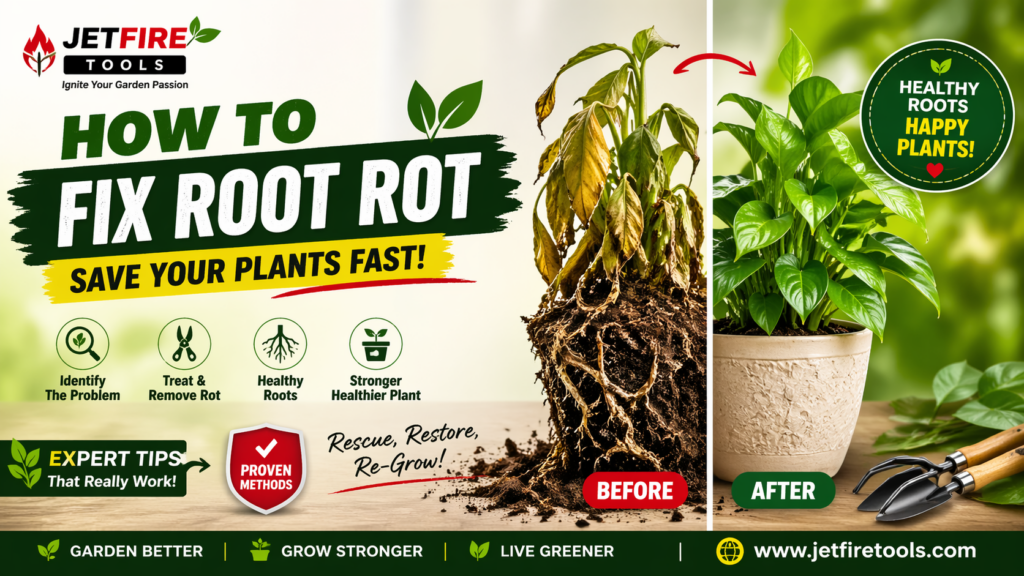
Struggling with root rot? Learn how to fix root rot quickly with expert techniques, prevention tips, and proven solutions. Save your plants today with this complete guide by JetFire Tools. how to fix root rot, root rot treatment, root rot in plants, how to save plant from root rot, root rot solution, root rot symptoms, fix overwatered plants, plant root rot cure, indoor plant root rot treatment, gardening tips root rot.
Stop root rot from killing your garden. Learn how to identify mushy roots, perform emergency “surgery,” and use the right tools to revive your plants today. how to fix root rot, plant root recovery, brown mushy roots, soil drainage, gardening tool maintenance, save dying plants, root rot fungicide, JetFire Tools.
Discover more from Leading Garden Tools Manufacturer & Supplier in India
Subscribe to get the latest posts sent to your email.
Pingback: 6 Revolutionary Smart Gardening Gadgets and Technology: Transform Your Garden with Powerful, Future-Ready Tools