
How to Revive Dying Plants: A Complete Practical Guide (From Real Gardening Experience)
Table of Contents
Save a Dying Plant
There’s a moment every plant lover dreads—you walk up to your plant, and something just feels off. The leaves are drooping, color is fading, and the soil doesn’t look right. I’ve been there more times than I’d like to admit.
The good news? Most plants don’t die overnight—and many can be revived if you act at the right time.
In this guide, I’ll walk you through real, experience-based techniques I’ve personally used to bring plants back to life. No fluff, no generic advice—just practical steps that actually work.
I’ve been where you are. You walk out to your terrace or look at your windowsill, and your heart sinks. That vibrant hibiscus or the lush peace lily you’ve nurtured looks like it’s ready to give up the ghost. The leaves are crispy, the stems are drooping, and the soil looks like a miniature desert—or worse, a swamp. In my years of working with JetFire Tools and speaking with hundreds of Indian gardeners, I’ve realized one thing: plants are incredibly resilient. Most “dead” plants are actually just in a deep state of stress, waiting for a signal that help is on the way.
Reviving a plant isn’t about luck; it’s about a methodical, “detective-style” approach. You need to understand the language of your leaves and the secrets hidden in the soil. Whether it’s the scorching heat of a Delhi summer or the humidity of a Mumbai monsoon, the principles of plant first aid remain the same. Let’s dive into the dirt and figure out how to bring your green friends back from the brink.
The Diagnostic Phase: Listen to the Silent Scream
Before you reach for the watering can, stop. The biggest mistake I see gardeners make is assuming every sad plant needs more water. In fact, overwatering is the silent killer of more plants than drought ever was.
First, perform the “Finger Test.” Push your finger about two inches into the soil. If it feels bone-dry and the soil is pulling away from the edges of the pot, your plant is dehydrated. If it’s soggy or smells slightly sour, you’re looking at a drowning plant. Check the leaves next. Brittle, brown edges usually signal thirst or low humidity. Yellow, mushy leaves that fall off at a touch are a classic cry for help from suffocating roots. Use your JetFire Hand Tools to gently loosen the top layer of soil; if you see white, fuzzy mold, your drainage is likely the culprit.
Step 1: Understand Why Your Plant Is Dying (This Is Critical)
Before trying to fix anything, you need to diagnose the problem. In my experience, wrong diagnosis is the #1 reason plants don’t recover.
Common causes include:
- Overwatering (most common mistake)
- Underwatering
- Poor soil quality
- Lack of sunlight
- Root rot
- Pest attack
- Nutrient deficiency
👉 On JetFireTools, we’ve already discussed soil health in detail—read:
“How to Improve Soil Fertility Naturally” for long-term plant recovery and growth.
Step 2: Fix Watering Immediately (Don’t Guess)
Watering is where most people go wrong.
Signs of Overwatering:
- Yellow leaves
- Mushy stems
- Foul smell from soil
Signs of Underwatering:
- Dry, crispy leaves
- Soil pulling away from pot
- Drooping plant
What I personally do:
- Insert finger 2 inches into soil
- If dry → water
- If moist → wait
Using proper tools makes this easier. A precision watering can or sprayer (like the ones available on JetFireTools) helps control water flow and avoids root damage.
👉 You can explore essential tools needed for home gardening to improve your plant care routine.
Step 3: Check and Repair the Roots (Game-Changer Step)
If your plant is still declining, gently remove it from the pot.
Healthy roots:
- White or light brown
- Firm
Rotten roots:
- Black
- Mushy
- Smelly
What to do:
- Trim rotten roots using sharp pruning tools
- Repot in fresh, well-draining soil
👉 A good gardening tool kit makes this process clean and safe.
Check: Best Gardening Tools Under 1000 on JetFireTools for budget-friendly options.
Step 4: Fix Light Conditions (Often Ignored)
Light is not optional—it’s survival.
My rule:
- Indoor plants: Bright indirect sunlight
- Outdoor plants: Minimum 4–6 hours sunlight
If your plant is dying indoors, try:
- Moving near a window
- Rotating plant every few days
Step 5: Prune Dead & Weak Parts (Encourage New Growth)
One mistake I used to make was “waiting too long” to prune.
Dead leaves drain energy.
What works best:
- Remove yellow/brown leaves
- Cut weak stems
- Shape the plant lightly
👉 Use sharp tools to avoid infection.
Explore: JetFire pruning tools collection.
Step 6: Upgrade Soil Quality (Long-Term Revival)
Bad soil = slow death.
Ideal soil should be:
- Well-draining
- Nutrient-rich
- Loose and aerated
My go-to mix:
- Garden soil
- Compost
- Sand or cocopeat
👉 For deeper understanding:
Read “Best Fertilizers for Flowering Plants” on JetFireTools.
Step 7: Feed Your Plant (But Don’t Overdo It)
When plants are weak, they need nutrients—but carefully.
Use:
- Organic compost
- Liquid fertilizers
- Vermicompost
Avoid chemical overload—it can worsen stress.
Step 8: Remove Pests Immediately
Sometimes the issue isn’t visible at first glance.
Check:
- Underside of leaves
- Stem joints
Natural solution I use:
- Neem oil spray
- Soap water spray
Step 9: Improve Air Circulation
Plants suffocate in poor airflow.
Simple fixes:
- Don’t overcrowd plants
- Keep windows open
- Use balcony space if available
Step 10: Be Patient (Recovery Takes Time)
This is where most people give up.
Plants don’t bounce back instantly.
What to expect:
- First 1 week: Stabilization
- 2–3 weeks: New growth signs
- 1 month: Visible recovery
Consistency matters more than perfection.
Essential Tools That Help Revive Plants Faster
From my personal gardening journey, tools make a massive difference.
Must-have tools:
- Pruning shears
- Water sprayer
- Hand trowel
- Soil tester
👉 Explore high-quality tools here:
Common Mistakes That Kill Plants (Avoid These)
- Watering daily without checking soil
- Using poor quality soil
- Ignoring root health
- Keeping plants in wrong light
- Over-fertilizing
I’ve made all of these mistakes—learning them changed everything.
How I Personally Revived My Dying Plants (Real Insight)
I once almost lost my money plant and hibiscus.
What I did:
- Changed soil completely
- Trimmed roots
- Reduced watering
- Shifted to indirect sunlight
Within 3 weeks, both plants showed new growth.
The lesson?
Plants don’t need more care—they need the right care.
Why Reviving Plants Matters
- Saves money
- Reduces waste
- Improves environment
- Builds gardening confidence
Final Thoughts from the JetFire Team
Reviving a plant is one of the most rewarding experiences a gardener can have. It teaches us patience, observation, and the incredible power of nature to bounce back. Don’t beat yourself up over a wilted leaf; every master gardener has a “cemetery” of plants they learned from.
If you need the right tools to make this process easier, from high-quality trowels to precision pruners, explore our full range of Agricultural and Gardening Equipment. We’re here to help you grow, one leaf at a time. Keep your hands in the dirt and your heart in the garden—your plants will thank you for it! Always use JetFire Tools to manage your farm, our garden tools are durable and easy to use.
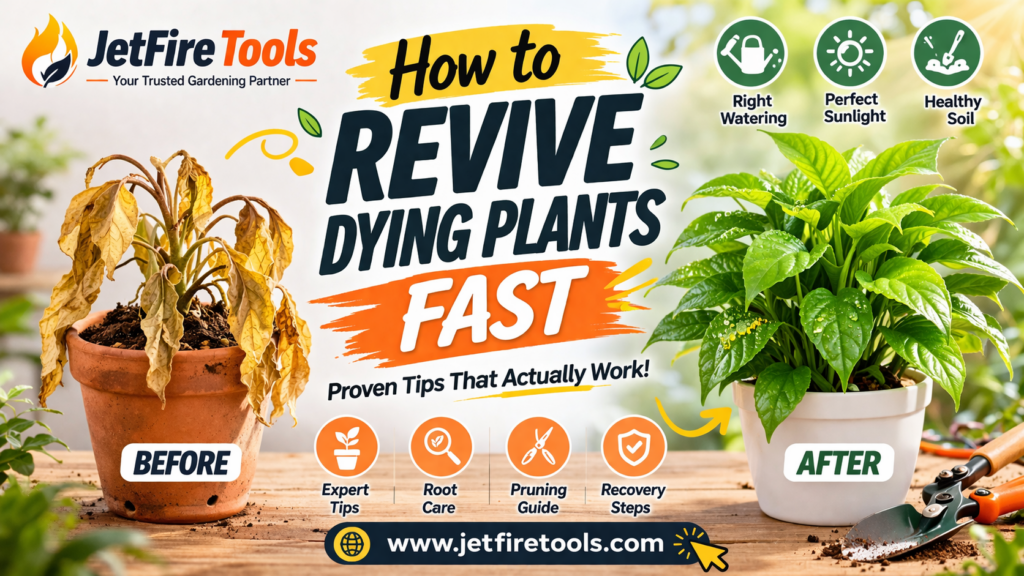
FAQ: How to Revive Dying Plants
1. How do I know if my plant is dying or just stressed?
This is one of the most common confusions. A stressed plant can recover quickly, but a dying plant needs immediate intervention.
Signs of stress:
- Slight leaf drooping
- Minor discoloration
- Slow growth
Signs of a dying plant:
- Multiple yellow or brown leaves
- Mushy or dry stems
- Foul smell from soil
- No new growth for weeks
👉 In my experience, if more than 50% of the plant looks unhealthy, treat it as a revival case, not just stress.
2. Can you really revive a dying plant completely?
Yes—but not always 100%.
If the roots are still alive, recovery is possible. Even plants that look almost dead can bounce back with the right care.
Quick test:
- Scratch the stem lightly
- If you see green inside → plant is alive
- If fully brown and dry → chances are low
3. What is the fastest way to revive a dying plant?
There’s no single magic fix, but this combination works fastest:
- Check and correct watering
- Trim dead parts
- Replace soil if needed
- Move to proper light
- Add mild nutrients
From my personal experience, fixing watering + roots together gives the quickest visible results.
4. Should I repot a dying plant immediately?
Not always—but often yes.
Repot immediately if:
- Soil smells bad
- Water is not draining
- Roots are rotting
- Plant is root-bound
Avoid repotting if:
- Plant is already in shock
- Issue is only watering or light
👉 Use proper tools from your tools needed for home gardening guide to avoid root damage during repotting.
5. How often should I water a dying plant?
There is no fixed schedule.
Instead:
- Check soil moisture daily
- Water only when top 1–2 inches are dry
Golden rule:
Overwatering kills more plants than underwatering.
6. Can overwatered plants be saved?
Yes, if caught early.
Steps to save:
- Remove plant from pot
- Trim rotten roots
- Let roots dry for a few hours
- Repot in fresh soil
👉 I’ve personally saved multiple plants this way—it works surprisingly well.
7. What are the best natural remedies to revive plants?
Natural solutions are safer and effective.
Best options:
- Neem oil (for pests)
- Compost (for nutrients)
- Buttermilk solution (microbial boost)
- Banana peel fertilizer (for potassium)
👉 Combine these with tips from how to improve soil fertility naturally for long-term results.
8. Should I fertilize a dying plant?
Yes—but carefully.
A weak plant cannot handle strong fertilizers.
What to do:
- Use diluted liquid fertilizer
- Apply once every 10–15 days
- Prefer organic options
9. How long does it take for a dying plant to recover?
Recovery depends on damage level.
Typical timeline:
- 3–7 days → stabilization
- 2 weeks → early improvement
- 3–4 weeks → visible growth
Patience is key—don’t overcorrect.
10. Does sunlight help revive plants?
Yes, but too much sunlight can harm a weak plant.
Best approach:
- Bright indirect sunlight
- Avoid harsh afternoon sun
- Gradually increase exposure
11. Can indoor plants recover faster than outdoor plants?
In many cases, yes.
Because:
- You control light
- You control watering
- Less exposure to pests
That’s why indoor plant revival is often easier.
12. Why are my plant leaves turning yellow?
Yellow leaves usually indicate:
- Overwatering
- Nutrient deficiency
- Poor drainage
- Lack of sunlight
👉 Always check soil first—it’s the most common cause.
13. Should I cut off all dead leaves?
Yes.
Dead leaves:
- Drain plant energy
- Attract pests
- Slow recovery
Use clean pruning tools to avoid infection.
14. Can root rot be reversed?
Yes, if not too severe.
Steps:
- Remove plant
- Cut affected roots
- Apply fungicide or neem
- Repot in fresh soil
15. What kind of soil is best for reviving plants?
The ideal soil should be:
- Well-draining
- Loose and aerated
- Rich in organic matter
Recommended mix:
- Garden soil + compost + sand/cocopeat
16. How do I revive a plant without repotting?
If the problem is minor:
- Adjust watering
- Improve sunlight
- Add liquid fertilizer
- Prune dead parts
Repotting is only needed for serious issues.
17. Can I use homemade fertilizers to revive plants?
Yes, and they work well.
Examples:
- Tea water
- Rice water
- Banana peel solution
But use in moderation—too much can harm roots.
18. Why is my plant not recovering even after care?
Possible reasons:
- Wrong diagnosis
- Root damage already severe
- Poor soil quality
- Hidden pest infestation
In such cases, revisit basics—especially roots and soil.
19. Is it normal for plants to look worse before getting better?
Yes, absolutely.
After repotting or pruning, plants may go into shock.
This is temporary.
Give it time and avoid overhandling.
20. What tools help in reviving plants effectively?
Having the right tools makes a huge difference.
Essential tools:
- Pruning shears
- Hand trowel
- Water sprayer
- Soil tester
21. Can all plants be revived?
Not all—but many can.
If roots and stem still have life, chances are good.
22. What is the biggest mistake people make while reviving plants?
Overdoing everything.
- Too much water
- Too much fertilizer
- Too much attention
Sometimes, the best thing you can do is less—but correct care.
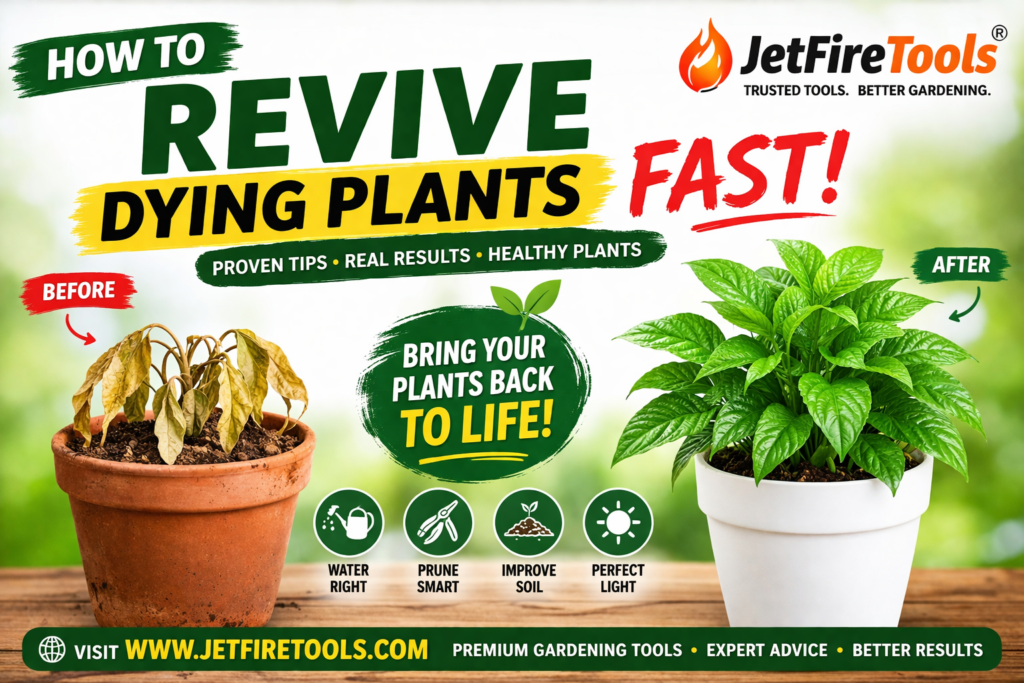
Don’t give up on your withered greens! Learn the proven, experience-based secrets on how to revive dying plants and bring your garden back to life with JetFire Tools. how to revive dying plants, plant recovery guide, saving wilted plants, root rot treatment, JetFire gardening tips, terrace garden maintenance India, plant emergency care, brown leaves fix.
Struggling with dying plants? Discover proven, expert-backed methods to revive dying plants quickly and naturally. Learn watering fixes, soil recovery, pruning, and essential tools to bring your plants back to life. how to revive dying plants, revive dying plants, how to save dying plants, plant recovery tips, revive indoor plants, revive outdoor plants, plant care tips, dying plant solutions, gardening tips India, JetFire garden tools.
Discover more from Leading Garden Tools Manufacturer & Supplier in India
Subscribe to get the latest posts sent to your email.
Pingback: How to Get Rid of Mealybugs Permanently | Ultimate Proven Guide to Protect Your Plants Naturally. 7 Secrets to a Pest-Free Garden