
Summer Gardening Tips India – Complete Practical Guide for Thriving Plants
Table of Contents
Summer Gardening Tips India
Summer in India is not gentle. From April to June, temperatures in many regions cross 40°C, and your plants feel that stress long before you do. If you’ve ever stepped into your garden in peak May and noticed drooping leaves, dry soil, or burnt edges—you already know summer gardening is less about growth and more about survival.
But here’s the good news: with the right approach, summer can actually become one of your most productive gardening seasons.
There is something profoundly spiritual about waking up at 5:30 AM in an Indian April. The air is momentarily cool, the “Koel” is calling from a nearby mango tree, and for a fleeting hour, the garden feels like a sanctuary before the relentless sun takes over. If you are a plant lover in India, you know that summer isn’t just a season; it’s a battle of endurance. From the searing “Loo” winds of the North to the humid, sticky heat of the South, our gardens face extreme stress.
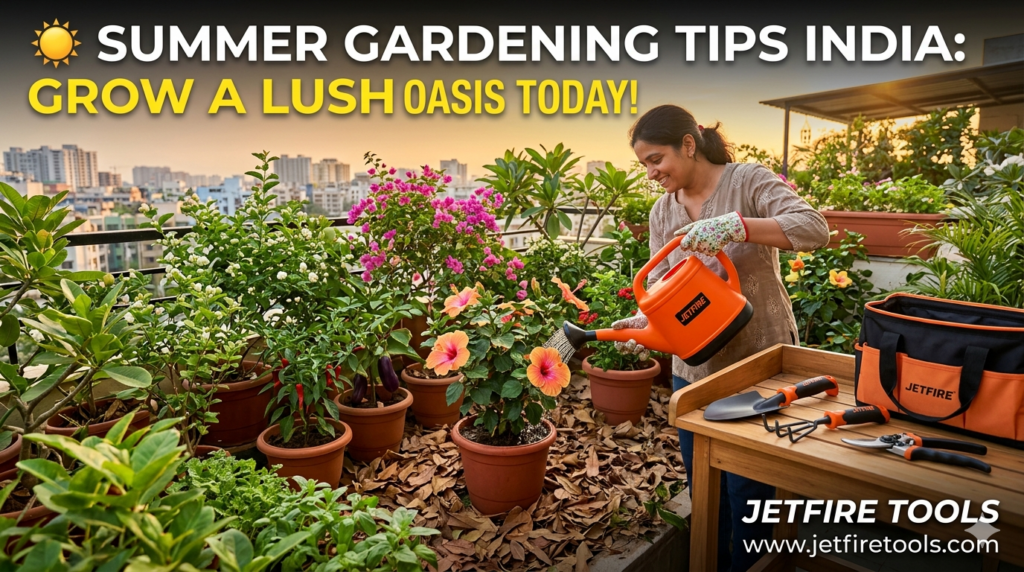
I’ve spent years experimenting on my own terrace, watching my beloved Hibiscus wilt by noon and learning the hard way that a “quick splash” of water at 10:00 AM is more of a death sentence than a relief. But over time, I’ve discovered that with the right mindset and the professional-grade JetFire gardening tools, you don’t just help your plants survive—you help them thrive.
In this guide, I’m sharing my personal blueprint for mastering the Indian summer, covering everything from soil prep to the exact tools that make the job easier.
I’ve personally seen struggling gardens turn into lush green spaces—even in extreme heat—just by making a few smart changes in watering, soil care, and tool usage.
Let’s break it down properly.
Understanding Indian Summer Gardening Challenges
Before jumping into tips, it’s important to understand what you’re dealing with.
Indian summers bring:
- Intense sunlight that scorches leaves
- Rapid evaporation of water
- Dry winds that dehydrate plants
- Soil nutrient loss
- Increased pest attacks like aphids and mites
Ignoring these factors is where most gardeners go wrong. Summer gardening is not about doing more work—it’s about doing the right work at the right time.
1. Smart Watering Strategy (Not Just More Water)
Most beginners think summer = more water. That’s only half true.
The real trick is timing and depth.
Water your plants early morning (5:30 AM – 8 AM) or late evening (after 6 PM). Midday watering is almost useless because water evaporates quickly and can even damage roots.
Instead of frequent light watering, go for deep watering. This encourages roots to grow deeper and become heat-resistant.
👉 If you’re maintaining a kitchen garden, using the right tools like precision watering cans or spray systems can make a big difference. You can explore practical tools in the gardening section of JetFire Tools to improve efficiency and reduce water wastage.
2. Mulching – Your Secret Weapon Against Heat
If you apply only one tip from this guide, make it this one.
Mulching is like giving your soil a protective blanket.
Use materials like:
- Dry leaves
- Straw
- Coconut husk
- Grass clippings
Mulch helps in:
- Retaining moisture
- Reducing soil temperature
- Preventing weed growth
- Improving soil health over time
I’ve personally noticed that mulched plants need 30–40% less water, which is a game changer in Indian summers.
3. Choose the Right Summer Crops
Not all plants survive Indian summers. Choosing the right ones makes your life much easier.
Best summer vegetables for India:
- Okra (Bhindi)
- Bottle gourd (Lauki)
- Bitter gourd (Karela)
- Brinjal (Baingan)
- Chilli
- Cucumber
These plants not only survive but actually thrive in heat.
👉 If you’re planning a kitchen garden, you can red this detailed article on selecting best seeds for your garden “best seeds for kitchen garden India”.
4. Provide Shade (But Don’t Overdo It)
Plants need sunlight—but too much of it can burn them.
Use:
- Green shade nets (50%)
- Old cotton cloth
- Temporary bamboo structures
Focus especially on:
- Seedlings
- Leafy vegetables
- Potted plants on terraces
A small shading setup can reduce temperature by 3–5°C, which is often the difference between survival and failure.
5. Soil Health Matters More in Summer
Summer drains your soil quickly.
To keep it alive:
- Add compost every 15–20 days
- Use vermicompost or organic fertilizers
- Avoid heavy chemical fertilizers (they increase heat stress)
Healthy soil retains moisture better and supports stronger roots.
👉 If still plant dying read this article to know more “how to revive dying plants”.
6. Pruning & Maintenance – Do It Carefully
Pruning in summer should be minimal and strategic.
Remove:
- Dead leaves
- Diseased branches
- Overcrowded growth
This improves airflow and reduces stress on the plant.
Using a sharp and clean tool is critical here. A good-quality pruning secateur (like JetFire’s) ensures clean cuts and prevents infection.
7. Pest Control in Summer
Heat doesn’t just stress plants—it attracts pests.
Common summer pests:
- Aphids
- Spider mites
- Whiteflies
Use natural solutions:
- Neem oil spray
- Soap water solution
- Garlic-chilli spray
Avoid heavy chemical pesticides—they can damage already stressed plants.
8. Container Gardening Tips for Indian Summers
Terrace and balcony gardens suffer more heat than ground soil.
Important tips:
- Use bigger pots (retain moisture better)
- Avoid black plastic pots (they heat up quickly)
- Ensure proper drainage
- Group plants together to create a humid microclimate
9. Lawn Care in Summer
If you have a lawn, summer can turn it brown quickly.
- Water deeply but less frequently
- Keep grass slightly longer (protects roots)
- Avoid mowing during peak heat
- Use organic lawn feed
10. Heat-Proofing Your Garden Setup
Some practical upgrades that make a big difference:
- Drip irrigation systems
- Self-watering pots
- Raised beds with mulch
- Wind barriers
Investing in the right gardening tools can save both time and effort. Your product pages on JetFireTools.com can be interlinked here under gardening equipment and irrigation tools.
11. The Magic of Mulching: Your Soil’s Sunscreen
Think of mulch as a protective blanket for your soil. Without it, the sun bakes the earth into a hard crust, killing the beneficial microbes and drying out the roots.
I personally use dried leaves, coco-peat, or even sugarcane bagasse. By spreading a 2-inch layer over the soil surface, I’ve managed to reduce my watering needs by nearly 30%. It keeps the root zone significantly cooler, which is the difference between a plant that lives and a plant that thrives. If you’re looking for quality soil amendments, check out the JetFire Soil and Manure collection to give your plants that extra nutritional boost.
12. Precision Pruning and Soil Health
Summer is a time of rapid growth for some and dormancy for others. Using a sharp JetFire Pruning Secateur, I regularly remove spent flowers (deadheading) and yellowing leaves. This prevents the plant from wasting precious energy on “dead weight” and improves air circulation, which helps prevent fungal infections.
However, don’t go overboard. In the summer, more foliage means more shade for the plant’s own stems and the soil below. Just a light trim to keep things tidy is enough.
The “Cultivator” Secret:
Once a week, I use a JetFire 5-Finger Cultivator to gently loosen the top layer of soil. This prevents the soil from becoming too compacted, allowing oxygen and water to reach the roots more efficiently.
13. Creating a Microclimate: Grouping and Shading
If you have a balcony or a small terrace, the heat is amplified by the concrete walls and floors. One of the best insights I ever gained was the power of “grouping.”
By placing your pots close together, the plants create their own little humid microclimate. The transpiration from one plant helps cool the air for its neighbor. For my more sensitive plants, like Money Plants or Ferns, I’ve installed a 50% green shade net. It’s a small investment that prevents “leaf burn” and keeps your garden looking lush even in May.
14. Managing Pests Naturally
You’d think the heat would kill the bugs, but Indian summers bring out the Mealybugs and Aphids in full force. Instead of harsh chemicals that can further stress a heat-fatigued plant, I stick to Neem oil sprays.
Every Sunday evening, I inspect my plants. If I see those white, cottony Mealybugs, I use a high-pressure spray from a JetFire Garden Sprayer to knock them off before applying a natural pesticide. It’s therapeutic, and it works!
15. Essential Tools for the Indian Summer Gardener
You wouldn’t try to fix a car without a wrench, so why garden without the right tools? The heat makes gardening physically demanding, so efficiency is key. Here is what I keep in my JetFire Gardening Kit:
| Tool | Why it’s Essential for Summer |
| Heavy-Duty Trowel | For digging in hard, sun-baked soil without bending the tool. |
| Drip Irrigation Kit | The ultimate “set and forget” solution for busy plant parents. |
| Hedge Shears | Essential for keeping fast-growing summer shrubs in check. |
| Gardening Gloves | Protects your hands from the hot soil and thorny bougainvillea. |
The Joy of Night Gardening
Since the days are too hot for heavy work, I’ve shifted my “heavy lifting” to the evening. There is a special kind of peace in repotting a plant under the moonlight with a cool breeze. Using my JetFire Hand Fork and Weeder, I clear out any weeds that are stealing water from my main plants.
Weeds are incredibly opportunistic in the summer; they will grow faster than your roses if you let them. A quick 10-minute session every evening keeps the garden pristine and gives you a chance to decompress after a long day.
Common Mistakes to Avoid in Summer Gardening
Many gardeners unknowingly harm their plants:
- Overwatering daily
- Watering in direct sunlight
- Ignoring mulching
- Using poor-quality tools
- Growing winter crops in peak summer
Avoiding these mistakes alone can improve your garden’s health drastically.
Real Experience Insight
One thing I’ve learned after years of gardening in Indian summers is this:
Plants don’t die because of heat alone—they die because of mismanagement during heat.
When you align your gardening practices with the season instead of fighting it, everything changes.
Even a small balcony can turn into a productive green space.
Final Thoughts
Summer gardening in India is not easy—but it’s incredibly rewarding.
With smart watering, proper mulching, the right plant selection, and reliable tools, you can not only protect your garden but make it thrive.
Focus on efficiency, not effort.
And remember, gardening is not about perfection—it’s about consistency.
Frequently Asked Questions – Summer Gardening Tips India
1. How often should I water plants in summer in India?
In Indian summers, watering frequency depends on plant type, soil, and container size. Generally, plants should be watered once daily in early morning. In extreme heat (above 40°C), potted plants may require twice daily watering—morning and evening.
However, the focus should be on deep watering rather than frequent light watering. Deep watering ensures moisture reaches the roots and helps plants develop heat resistance. Always check soil moisture by inserting your finger 1–2 inches deep before watering again.
2. What is the best time to water plants during summer?
The ideal time is early morning (5:30 AM to 8:00 AM). This allows water to soak into the soil before the sun evaporates it.
Evening watering (after 6 PM) is also acceptable, but avoid late-night watering as it may increase fungal issues. Never water during peak afternoon heat, as it can shock plants and lead to water loss.
3. Which vegetables grow best in Indian summer?
Several vegetables thrive in Indian summer conditions. The best options include:
- Okra (Bhindi)
- Bottle gourd (Lauki)
- Bitter gourd (Karela)
- Ridge gourd (Turai)
- Cucumber
- Brinjal (Baingan)
- Chilli
These crops are naturally heat-tolerant and produce well even in high temperatures. For better results, always use high-quality seeds, best seeds for kitchen garden India.
4. How can I protect my plants from extreme heat?
Protecting plants from heat requires a combination of strategies:
- Use mulch to retain soil moisture
- Install shade nets (50%) for sensitive plants
- Water deeply and consistently
- Avoid repotting during peak heat
- Group plants together to maintain humidity
Even simple shading techniques can significantly reduce plant stress and prevent leaf burn.
5. What is mulching and why is it important in summer?
Mulching involves covering the soil surface with organic materials like dry leaves, straw, or grass clippings.
In summer, mulching is essential because it:
- Reduces water evaporation
- Keeps soil temperature lower
- Improves soil fertility
- Prevents weed growth
It is one of the most effective and low-cost ways to protect plants in Indian climates.
6. How do I take care of terrace or balcony plants in summer?
Terrace gardens face direct sunlight and higher temperatures, so extra care is needed:
- Use larger pots to retain moisture
- Avoid metal or black plastic containers
- Provide partial shade during peak hours
- Water more frequently than ground plants
- Ensure proper drainage
Creating a microclimate by grouping plants together also helps maintain humidity.
7. Can I prune plants during summer?
Yes, but pruning should be minimal and strategic in summer.
Remove:
- Dead leaves
- Diseased branches
- Overcrowded growth
Avoid heavy pruning, as it can stress plants further. Always use a sharp pruning tool (secateur) to make clean cuts and prevent infections. This is where high-quality tools from JetFire Tools can make a noticeable difference.
8. How can I control pests in summer naturally?
Summer increases pest activity, but natural control methods are effective:
- Spray neem oil solution every 7–10 days
- Use mild soap water spray for aphids
- Apply garlic-chilli spray as a repellent
Regular inspection is key. Early detection prevents major infestations.
9. Why do plant leaves turn yellow or dry in summer?
Yellowing or drying leaves in summer can be caused by:
- Overwatering or underwatering
- Excessive heat exposure
- Poor soil nutrition
- Pest attacks
Check soil moisture, improve mulching, and ensure proper nutrients. If plants are severely affected, refer to recovery techniques in this detailed article on how to revive dying plants.
10. Which flowers can grow in Indian summer?
Heat-tolerant flowering plants include:
- Zinnia
- Sunflower
- Portulaca (Moss Rose)
- Cosmos
- Balsam
These flowers not only survive but bloom beautifully in hot conditions, making them perfect for summer gardens.
11. Is drip irrigation useful for summer gardening in India?
Yes, drip irrigation is highly effective in summer.
Benefits include:
- Saves water
- Delivers moisture directly to roots
- Reduces evaporation
- Prevents overwatering
It is especially useful for kitchen gardens and terrace setups. You can integrate this with your gardening tools section on JetFireTools.com.
12. How can I improve soil quality during summer?
To maintain healthy soil:
- Add compost every 2–3 weeks
- Use vermicompost or organic fertilizers
- Avoid chemical fertilizers in extreme heat
- Keep soil covered with mulch
Healthy soil retains moisture better and supports stronger plant growth.
13. What are common mistakes in summer gardening?
Some common mistakes include:
- Watering during peak sunlight
- Overwatering plants daily
- Ignoring mulching
- Using poor-quality tools
- Growing winter crops in summer
Avoiding these mistakes can significantly improve plant survival and growth.
14. Can indoor plants survive Indian summer?
Yes, but they need proper care:
- Keep them away from direct sunlight
- Maintain indoor humidity
- Water when soil feels dry
- Occasionally mist leaves
Indoor plants are less exposed but still affected by temperature and dry air.
15. How do I start a kitchen garden in summer?
Starting a summer kitchen garden is simple if done correctly:
- Choose heat-resistant vegetables
- Use nutrient-rich soil
- Ensure proper sunlight (not extreme exposure)
- Water consistently
- Use basic gardening tools
Know about best gardening tool kit in India for beginners to get started efficiently.
16. Does mulching really reduce watering needs?
Yes, mulching can reduce watering requirements by 30–50%. It prevents moisture loss and keeps soil cool, making it one of the most effective summer gardening techniques.
17. How do I know if my plant is stressed due to heat?
Signs of heat stress include:
- Wilting even after watering
- Leaf curling
- Brown or burnt edges
- Slow growth
Immediate action like shading, deep watering, and mulching can help plants recover.
18. What tools are essential for summer gardening?
Essential tools include:
- Watering can or spray pump
- Pruning secateur
- Hand trowel
- Garden gloves
Using high-quality tools improves efficiency and plant health. JetFire gardening tools collection.
Master summer gardening in India with our expert-led guide. Learn heat-beating watering hacks, the best sun-loving plants, and essential tool secrets from JetFire to keep your garden thriving in 45°C heat. summer gardening tips India, gardening in Indian summer, heat resistant plants India, summer garden care, JetFire gardening tools, terrace gardening India, how to protect plants from heat India, watering plants in summer India.
Master summer gardening in India with our expert-led guide. Learn heat-beating watering hacks, the best sun-loving plants, and essential tool secrets from JetFire to keep your garden thriving in 45°C heat. summer gardening tips India, gardening in Indian summer, heat resistant plants India, summer garden care, JetFire gardening tools, terrace gardening India, how to protect plants from heat India, watering plants in summer India.
Discover expert summer gardening tips in India to protect plants from heat, boost growth, and increase yield. Practical, experience-based guide for every home gardener. summer gardening tips India, gardening in summer India, summer plant care India, how to protect plants from heat India, kitchen garden summer tips India, summer gardening guide India. watering plants in summer India, best summer vegetables India, terrace gardening summer care, heat resistant plants India, organic gardening tips India.
Discover more from Leading Garden Tools Manufacturer & Supplier in India
Subscribe to get the latest posts sent to your email.
You must be logged in to post a comment.