
Organic Fertilizer for Home Garden in India – Complete Practical Guide
Table of Contents
Organic Fertilizer for Home Garden
If you’ve ever felt that your plants are “just surviving” instead of thriving, the problem is usually not sunlight or water — it’s soil nutrition.
When I first started gardening at home, I made a common mistake: I relied on random fertilizers without understanding what my soil actually needed. The result? Weak plants, slow growth, and disappointing yields.
That changed when I switched to organic fertilizers.
In Indian home gardening conditions — especially terrace gardens, balcony pots, and small spaces — organic fertilizers are not just a better choice, they are often the only sustainable solution.
In this guide, I’ll share practical, tested, and India-specific insights on how to use organic fertilizer for home garden in India effectively.
When I first started my journey with JetFire Tools, I used to think that “feeding” a plant was a simple transaction: you give it a chemical, and it gives you a flower. I was wrong. Gardening in India, with our intense heat cycles and erratic monsoons, taught me that you don’t actually feed the plant—you feed the soil.
In this exhaustive guide, I’m going to share the hard-earned lessons from my own terrace and the professional insights we’ve gathered at JetFire. We are moving beyond the generic “put some manure” advice. We are going to look at the why, the how, and the when of organic fertilization to ensure your home garden isn’t just surviving, but truly thriving.
Why Organic Fertilizer is Essential for Indian Home Gardens
Indian gardening conditions are unique:
- Extreme heat in summers
- Heavy rains during monsoon
- Poor-quality urban soil
- Limited container space
Chemical fertilizers may give quick results, but they:
- Damage soil structure over time
- Kill beneficial microbes
- Reduce long-term fertility
Organic fertilizers, on the other hand:
- Improve soil health naturally
- Enhance water retention (important for pots)
- Support beneficial microbes
- Provide slow and steady nutrition
👉 If you’re setting up your garden, also read:
Terrace Gardening Setup Cost in India
Types of Organic Fertilizer for Home Garden in India
Let’s break this down practically — not just theory.
1. Compost – The Foundation of Organic Gardening
Compost is the most important organic fertilizer.
In my experience, even poor-quality soil becomes fertile within 30–45 days when compost is added regularly.
What you can compost:
- Kitchen waste (vegetable peels, fruit waste)
- Dry leaves
- Tea leaves
- Cow dung
Why compost works:
It improves:
- Soil texture
- Nutrient availability
- Root development
👉 Best Soil Mix for Pots in India
2. Vermicompost – Fast-Acting Natural Booster
If compost is the base, vermicompost is the growth accelerator.
It contains:
- Nitrogen
- Phosphorus
- Potassium
- Beneficial microbes
My observation:
Plants respond visibly within 7–10 days after applying vermicompost.
How to use:
- Mix 20–30% in soil
- Add a handful every 15 days
3. Cow Dung Fertilizer (Gobhar)
One of the oldest and most trusted fertilizers in India.
Types:
- Fresh (not recommended directly)
- Dried cakes
- Liquid slurry
Best use:
- Mix with soil before planting
- Use in compost
It improves microbial activity and overall soil life.
4. Liquid Organic Fertilizers (Highly Effective)
This is where most gardeners see quick visible results.
Common liquid fertilizers:
- Banana peel fertilizer
- Mustard cake fertilizer
- Compost tea
Why I personally prefer liquid fertilizers:
- Faster absorption
- Ideal for potted plants
- Easy to apply weekly
👉 How to Prevent Plant Diseases Naturally
5. Banana Peel Fertilizer – Potassium Powerhouse
Banana peels are rich in potassium — essential for:
- Flowering
- Fruiting
- Strong stems
Simple method:
- Soak peels in water for 2–3 days
- Use water for plants
You’ll notice better flowering in plants like tomatoes, chillies, and roses.
6. Mustard Cake Fertilizer (Sarson Khali)
Highly popular in Indian gardening.
Benefits:
- Promotes rapid plant growth
- Boosts flowering
- Improves soil microbes
Usage tip:
Always dilute before use, otherwise it may burn roots.
7. Neem Cake – Natural Fertilizer + Pest Control
Neem cake is underrated.
It acts as:
- Fertilizer
- Pest repellent
- Soil conditioner
Ideal for:
- Vegetable plants
- Indoor plants
How to Choose the Best Organic Fertilizer for Your Garden
This depends on your setup.
For terrace gardens:
Use:
- Compost + vermicompost + liquid fertilizer
For balcony gardening:
Use:
- Liquid fertilizers + neem cake
For vegetables:
Use:
- Mustard cake + compost + banana peel fertilizer
👉 Gardening Checklist for Every Season
1. The Organic Philosophy: Why Chemicals are a “Short-Term High”
Most beginners in India are tempted by the “miracle” results of urea or DAP. Yes, your plants will turn green overnight, but at what cost? Chemical fertilizers are like caffeine for plants; they provide a jolt but eventually deplete the soil’s natural biology.
In our tropical climate, chemical salts build up quickly in pots, leading to “soil crusting” where water just slides off the top. Organic fertilizers, on the other hand, work with the Earth. They break down slowly, improving the Soil Cation Exchange Capacity (CEC). This means the soil actually becomes better at holding onto nutrients over time. When you use organic methods, you are building a legacy for your garden, not just a temporary show.
2. Vermicompost: The “Black Gold” of Indian Gardening
If I could only recommend one fertilizer for a beginner in India, it would be Vermicompost. This is organic matter broken down by specific species of earthworms (like Eisenia fetida).
Why is it so effective here? Because it is “pre-digested.” It won’t “burn” your plants even if you add a little extra. For those using JetFire Grow Bags, mixing 30% Vermicompost into your potting soil is the single best thing you can do. It introduces beneficial microbes that help the roots absorb minerals more efficiently. I personally apply a handful to every pot at the start of the spring (February) and again before the monsoon (June).
3. The Power of Neem Cake: More Than Just a Nutrient
Neem (Azadirachta indica) is India’s gift to the gardening world. Neem cake is the residue left after oil is pressed from neem seeds. It is a dual-action powerhouse.
- As a Fertilizer: It’s rich in Nitrogen, Phosphorus, and Potassium.
- As a Protector: It contains azadirachtin, which protects your plant’s roots from nematodes and white grubs—common nightmares in Indian soil.
I always tell my customers: if your plants are looking “pale” and won’t grow despite watering, you likely have root-knot nematodes. Mixing Neem cake into the top layer of soil with a JetFire Hand Trowel creates a protective barrier that keeps the “bad guys” away while feeding the plant.
4. Liquid Seaweed Extract: The “Super-Food” Foliar Spray
In the 40°C+ summers of Delhi or Rajasthan, plants go into “heat stress.” Their roots stop taking up nutrients to save energy. This is where Liquid Seaweed Extract becomes a lifesaver.
Because it’s a liquid, you can spray it directly on the leaves (foliar feeding). It contains over 60 trace minerals and growth hormones like cytokinins. It acts like an electrolyte drink for your plants. I recommend a dilution of 2ml per liter of water, sprayed early in the morning. To get the best coverage, use a high-pressure sprayer to ensure the underside of the leaves—where the “stomata” or breathing pores are—gets coated.
5. The Traditional “Panchagavya”: Ancient Wisdom for 2026
We cannot talk about the best organic fertilizer for home garden in India without mentioning Panchagavya. This is a fermented mixture of five cow-derived products (ghee, curd, milk, dung, and urine), often boosted with jaggery and bananas.
While it sounds “old-school,” modern science confirms it is a microbial bomb. It acts as a bio-stimulant. If you have a fruiting plant like Lemon or Guava that refuses to set fruit, a monthly dose of diluted Panchagavya will change the game. It increases the “Brix” (sugar content) of the fruit, making your home-grown lemons juicier and sweeter than anything from the market.
6. DIY Kitchen Fertilizers: Turning Waste into Wealth
You don’t always need to buy a bag of fertilizer. Some of the best nutrients are in your dustbin.
- Banana Peel Tea: Bananas are loaded with Potassium (K). Soak 3 peels in a liter of water for 48 hours. Use this “tea” to water your Hibiscus or Roses. It encourages bigger, brighter blooms.
- Eggshell Powder: For your Tomato plants, calcium is king. Without it, you get “Blossom End Rot” (where the bottom of the tomato turns black). Wash, dry, and grind eggshells into a fine dust. Sprinkle this around the base.
- Rice Water (Mand): The water you discard after washing rice is rich in starches that feed the “good” bacteria in your soil. Never throw it away!
7. Mustard Cake (Sarson Ki Khali): The Winter Specialist
If you are growing winter vegetables like Cabbage, Cauliflower, or Broccoli, Mustard Cake is your best friend. It is incredibly high in Nitrogen.
Personal Tip: Never apply mustard cake directly in its dry form; it can attract fungus. Instead, ferment it. Soak 100g of mustard cake in 1 liter of water for 4–5 days until it starts to smell “funky.” Dilute this 1:10 with plain water until it looks like light tea. This is the “secret recipe” used by commercial nurseries across North India to get those giant, prize-winning blooms in December.
8. Steered Cow Dung (Gobar Khad): Proceed with Caution
Cow dung is the backbone of Indian agriculture, but for a home gardener, it can be a trap. Never use fresh cow dung. It is too “hot” (high ammonia) and will literally cook your plant’s roots.
Only use cow dung that is at least 1-2 years old—it should look like dark, odorless chocolate powder. If you are unsure, stick to Vermicompost. It’s safer for the confined space of a pot. If you are preparing a large garden bed, you can use the JetFire Garden Hoe to deeply incorporate well-rotted manure into the soil two weeks before planting.
9. Bone Meal: The Slow-Release Phosphorus
For root development and flowering, Phosphorus is essential. Bone meal is a slow-release organic source. Because it takes months to break down, I usually mix it into the soil only twice a year. It is particularly effective for “bulby” plants like Lilies or Amaryllis.
10. Wood Ash: The Potassium & pH Balancer
If you have a fireplace or use wood for cooking, keep the cold ash. It’s a great source of Potassium and Lime. However, use it sparingly! A small sprinkle is enough to deter pests like snails and slugs. It also helps if your soil has become too “acidic” from repeated use of certain organic matters.
11. Compost Tea: The Microbe Booster
Think of Compost Tea as a probiotic drink for your soil. To make it, take a muslin cloth, fill it with two cups of Vermicompost, and “steep” it in a bucket of water with a spoonful of jaggery (to feed the bacteria). Use an aquarium bubbler if you have one to keep it aerated. After 24 hours, you have a living liquid that will rejuvenate “tired” soil instantly.
The JetFire Seasonal Fertilization Calendar
| Month | Activity | Recommended Fertilizer |
| February (Spring) | Waking up the garden | Vermicompost + Bone Meal |
| May (Peak Heat) | Stress Management | Liquid Seaweed (Foliar Spray) |
| July (Monsoon) | Root Protection | Neem Cake Powder |
| October (Winter Prep) | Heavy Feeding | Mustard Cake Liquid + Cow Dung |
Unique Insights: How to Tell What Your Plant Needs
I often get asked, “How do I know which fertilizer to use?” Your plants are actually talking to you; you just need to know the language.
- Yellow Leaves (Older ones): This is usually a Nitrogen deficiency. Give them a “quick fix” with fermented mustard cake or a compost tea drench.
- Purple or Dark Red Tinge: This is a classic sign of Phosphorus deficiency. Time to add some Bone Meal.
- Brown, “Burnt” Edges on Leaves: This often indicates Potassium deficiency. Reach for that Banana Peel tea!
- Stunted Growth but Green Leaves: This usually means the soil pH is off, or you lack trace minerals. A Seaweed extract spray usually fixes this within a week.
When applying these, always ensure your soil is slightly moist. Never apply fertilizer to bone-dry soil, as it can cause “osmotic shock” to the fine root hairs. I always use a JetFire Hand Weeder to loosen the top inch of soil before applying solid fertilizers, ensuring the nutrients reach the root zone rather than sitting on the surface.
Common Mistakes to Avoid
Let me save you months of trial and error.
Over-fertilizing
More fertilizer ≠ faster growth
Using fresh cow dung directly
It can burn roots
Ignoring soil mix
Fertilizer works only if soil is well-balanced
Best Fertilizer Schedule for Home Garden (India)
Weekly:
- Liquid fertilizer
Every 15 days:
- Vermicompost
Monthly:
- Neem cake
Consistency matters more than quantity.
Organic Fertilizer vs Chemical Fertilizer
| Factor | Organic | Chemical |
|---|---|---|
| Soil Health | Improves | Damages |
| Cost | Low | High |
| Safety | Safe | Harmful |
| Long-term use | Sustainable | Not sustainable |
My Personal Routine (What Actually Works)
This is the exact routine I follow:
- Soil mix: compost + cocopeat + garden soil
- Every 7 days: liquid fertilizer
- Every 15 days: vermicompost
- Monthly: neem cake
Result:
- Faster growth
- Better yield
- Healthy soil
Best Organic Fertilizer Combination (Pro Tip)
If you want maximum growth, use this combo:
👉 Compost + Vermicompost + Mustard Cake + Liquid Fertilizer
This covers:
- Macro nutrients
- Micro nutrients
- Soil biology
Final Thoughts
Organic gardening is not just about avoiding chemicals — it’s about building a living ecosystem in your soil.
Once your soil becomes alive, your plants will grow effortlessly.
The biggest shift happens when you stop thinking:
👉 “Which fertilizer should I use?”
and start thinking:
👉 “How can I improve my soil naturally?”
That’s when real gardening success begins. Always use JetFire Tools to manage your garden, our garden tools are durable and easy to use.
FAQ – Organic Fertilizer for Home Garden in India
1. What is the best organic fertilizer for home garden in India?
The best organic fertilizer is a combination of compost, vermicompost, and liquid fertilizers. Compost improves soil structure, vermicompost boosts nutrient availability, and liquid fertilizers provide quick nutrition. Using them together gives the best long-term results in Indian conditions.
2. Can I use only organic fertilizer for my home garden?
Yes, you can completely rely on organic fertilizers. In fact, many home gardeners in India grow vegetables, fruits, and flowers successfully using only natural inputs. The key is consistency and variety in fertilizers rather than depending on a single source.
3. How often should I apply organic fertilizer to plants?
Organic fertilizers should be applied regularly but in moderate quantities:
- Liquid fertilizer: every 7–10 days
- Vermicompost: every 15 days
- Neem cake or dry fertilizers: once a month
Consistency matters more than quantity.
4. Which organic fertilizer is best for faster plant growth?
For faster growth, vermicompost and mustard cake fertilizer are highly effective. Liquid fertilizers like compost tea or banana peel solution also give quick visible results because nutrients are absorbed faster.
5. What is the cheapest organic fertilizer for home gardening?
The cheapest and most sustainable option is homemade compost from kitchen waste. It costs almost nothing and provides excellent nutrients for plants.
6. Is cow dung good for home garden plants?
Yes, cow dung is one of the best traditional organic fertilizers in India. However, it should be:
- Used in composted form
- Dried before mixing in soil
Fresh cow dung should be avoided as it can damage plant roots.
7. How do I make organic fertilizer at home?
You can easily make fertilizer using:
- Kitchen waste compost
- Banana peel liquid fertilizer
- Mustard cake solution
- Compost tea
These methods are simple, low-cost, and highly effective for home gardens.
8. Which organic fertilizer is best for flowering plants?
For flowering plants like roses, hibiscus, and marigold:
- Banana peel fertilizer (rich in potassium)
- Mustard cake fertilizer
- Vermicompost
These promote better bud formation and vibrant flowers.
9. Which fertilizer is best for vegetable plants in India?
Vegetable plants need balanced nutrients. The best combination is:
- Compost (base nutrition)
- Vermicompost (growth boost)
- Liquid fertilizer (weekly feeding)
This ensures healthy growth and higher yield.
10. Can organic fertilizer burn plants?
Organic fertilizers are generally safe, but they can burn plants if:
- Used in excessive amounts
- Applied in concentrated liquid form
- Fresh manure is used directly
Always dilute liquid fertilizers and follow proper quantities.
11. How long does organic fertilizer take to show results?
Organic fertilizers usually show results within 7 to 15 days. Liquid fertilizers act faster, while compost improves soil gradually over time.
12. Is neem cake necessary for home gardening?
Neem cake is not mandatory, but it is highly beneficial because it:
- Adds nutrients to soil
- Prevents pests naturally
- Improves soil health
It is especially useful for vegetable gardening.
13. What is the best soil mix with organic fertilizer?
A good soil mix for Indian home gardening is:
- 40% garden soil
- 30% compost
- 20% cocopeat
- 10% vermicompost
This mix ensures proper drainage, nutrition, and root growth.
👉 Best Soil Mix for Pots in India
14. Can I mix different organic fertilizers together?
Yes, mixing different organic fertilizers is actually recommended. It provides:
- Balanced nutrition
- Better microbial activity
- Improved plant growth
Just avoid overuse and maintain proper intervals.
15. Which organic fertilizer is best for indoor plants?
For indoor plants:
- Liquid fertilizers (light and easy)
- Vermicompost (small quantity)
- Neem cake (for pest control)
Avoid strong-smelling fertilizers in indoor spaces.
16. Do organic fertilizers improve soil health?
Yes, this is their biggest advantage. Organic fertilizers:
- Increase beneficial microbes
- Improve soil structure
- Enhance water retention
Over time, soil becomes naturally fertile.
17. Can I use tea leaves as fertilizer?
Yes, used tea leaves are a good organic addition. They:
- Add nutrients
- Improve soil texture
Make sure to wash them to remove sugar before use.
18. What is liquid organic fertilizer and why is it important?
Liquid fertilizers are nutrient-rich solutions that are easily absorbed by plants. They are important because:
- They act quickly
- Ideal for potted plants
- Improve plant health rapidly
19. Is organic fertilizer better than chemical fertilizer?
Yes, for long-term gardening:
- Organic fertilizers improve soil
- Chemical fertilizers degrade soil over time
Organic methods are safer, eco-friendly, and sustainable.
20. What is the best fertilizer schedule for home garden in India?
A simple and effective schedule:
- Weekly: liquid fertilizer
- Every 15 days: vermicompost
- Monthly: neem cake
This keeps plants consistently nourished.
21. Can organic fertilizer be used in all seasons in India?
Yes, but adjust usage based on season:
- Summer: lighter doses, more frequent watering
- Monsoon: reduce liquid fertilizers
- Winter: slower feeding, focus on soil health
👉 Gardening Checklist for Every Season
22. Why are my plants not responding to organic fertilizer?
Possible reasons:
- Poor soil mix
- Overwatering or underwatering
- Lack of sunlight
- Inconsistent fertilization
Organic gardening requires balance, not just fertilizer.
23. Which organic fertilizer is best for beginners?
For beginners:
- Compost
- Vermicompost
- Banana peel fertilizer
These are easy to use and safe.
24. Can I grow vegetables completely organically at home?
Yes, many gardeners in India successfully grow:
- Tomatoes
- Chillies
- Spinach
- Coriander
using only organic fertilizers and natural methods.
25. What is the biggest benefit of organic fertilizer?
The biggest benefit is long-term soil health. Once your soil becomes fertile, plants grow naturally with less effort.
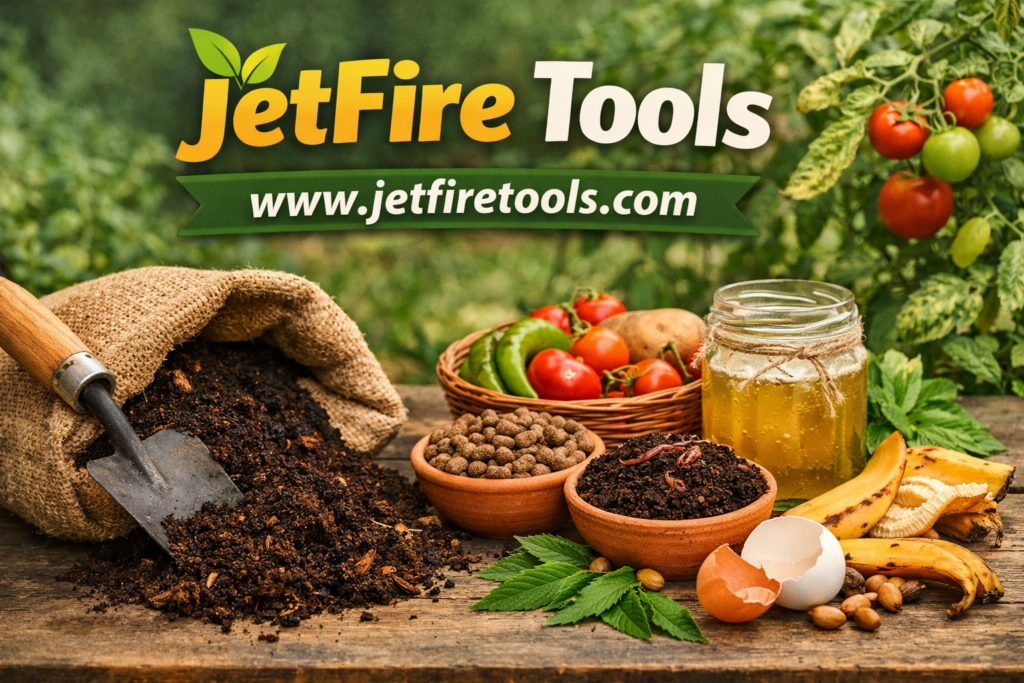
Transform your balcony or backyard! Discover the best organic fertilizer for home garden in India. From DIY compost tea to expert Neem cake tips, learn how to feed your plants safely with JetFire Tools’ ultimate guide to green growth. Organic fertilizer for home garden in India, best organic fertilizer for home garden, natural plant food India, DIY garden fertilizer recipes, JetFire Tools organic gardening, vermicompost vs cow dung India, liquid seaweed extract for plants, homemade NPK fertilizer.
Organic fertilizer for home garden in India, organic fertilizer for home garden, best organic fertilizer India, homemade organic fertilizer India. natural fertilizer for plants, compost for home garden, vermicompost benefits India, liquid fertilizer for plants, banana peel fertilizer. mustard cake fertilizer, neem cake fertilizer, cow dung fertilizer India, organic gardening India, terrace gardening fertilizer. balcony garden fertilizer, best fertilizer for vegetable plants India, eco friendly gardening India, kitchen waste compost. soil improvement organic fertilizer, natural plant food India, fertilizer for flowering plants organic, fertilizer for potted plants India. organic gardening tips India, sustainable gardening India, chemical free gardening India.
The use of organic fertilizer for home gardens in India significantly enhances soil fertility and promotes sustainable gardening practices. By incorporating natural plant foods such as vermicompost and liquid seaweed extracts, gardeners can create nutrient-rich environments conducive to plant growth. Additionally, homemade recipes for fertilizers, including banana peel and mustard cake, offer eco-friendly alternatives to chemical solutions. Emphasizing organic gardening techniques not only supports plant health but also contributes to an environmentally responsible gardening approach in urban settings, such as terrace and balcony gardens.
Discover more from Leading Garden Tools Manufacturer & Supplier in India
Subscribe to get the latest posts sent to your email.
Pingback: Master the Art: How to Grow Coriander at Home for an Incredible Harvest!
Pingback: Powerful Neem Oil Uses for Plants – Complete Guide to Healthy, Pest-Free Garden Naturally
Pingback: Best Fertilizers for Flowering Plants: Boost Blooming Naturally with Proven Results
Pingback: How To Make Compost At Home: 100% Guaranteed Success Guide For Vibrant Gardens