
How to Prevent Plant Diseases Naturally (Complete Practical Guide)
Table of Contents
The Secret to a Disease-Free Garden Isn’t in a Bottle
There is a specific kind of heartbreak that only a gardener understands. You spend weeks nurturing a seedling, watching its first true leaves unfurl, only to walk out one morning and find it draped in a ghostly white powder or speckled with ominous black spots. My first few years of serious gardening were a cycle of “react and regret.” I’d see a problem, panic, and run for the strongest organic spray I could find.
But here is the truth I learned after a decade in the dirt: Prevention isn’t just better than a cure; it’s the only way to garden sustainably. When we talk about how to prevent plant diseases naturally, we aren’t just looking for “organic” versions of toxic chemicals. We are looking to build an ecosystem so robust that diseases simply can’t find a foothold. At Jetfire Tools, we believe that the right approach starts with understanding the biology of your backyard.
If you’ve ever seen your healthy plants suddenly turn yellow, develop spots, or wilt for no clear reason, you know how frustrating plant diseases can be. I’ve personally faced this in my early gardening days—watching my tomato plants collapse after weeks of care taught me one important lesson:
👉 Prevention is always better than cure in gardening.
And the best part? You don’t need chemicals to do it.
In this guide, I’ll walk you through practical, natural, and experience-based methods to prevent plant diseases before they even start. These are not just textbook tips—they’re real strategies that actually work in Indian climate conditions and home gardens.
Understanding Why Plant Diseases Occur
Before preventing diseases, you need to understand what causes them.
Most plant diseases are caused by:
- Fungi (like powdery mildew, root rot)
- Bacteria (leaf spots, blight)
- Viruses (mosaic patterns, stunted growth)
But here’s the truth most beginners miss:
👉 Diseases don’t just attack randomly—they target weak plants.
A strong, well-maintained plant is naturally resistant.
That’s why prevention starts with building plant strength, not spraying solutions.
1. Start With Healthy Soil (Your Foundation)
From my experience, 80% of plant problems come from poor soil health.
Healthy soil means:
- Good drainage
- Rich organic matter
- Active beneficial microbes
What you should do:
- Add compost regularly (kitchen waste compost works great)
- Mix vermicompost every 15–20 days
- Use neem cake powder to prevent soil-borne diseases
👉 “Best Soil Mix for Home Gardening”
“How to Improve Soil Fertility Naturally”
Pro Tip:
Avoid using the same soil repeatedly without refreshing it. Old soil often carries fungal spores.
2. Give Proper Sunlight & Air Circulation
One mistake I used to make was overcrowding plants.
It looked lush—but it created:
- High humidity
- Poor airflow
- Perfect environment for fungal diseases
Natural prevention strategy:
- Keep proper spacing between plants
- Prune excess leaves regularly
- Ensure at least 5–7 hours of sunlight
👉 Summer Gardening Tips for Beginners
3. Water Smartly (Not More, Not Less)
Overwatering is one of the biggest reasons for diseases like:
- Root rot
- Fungal infections
- Leaf spots
What works best:
- Water early in the morning
- Avoid wetting leaves unnecessarily
- Check soil before watering (finger test)
👉 If soil is still moist, don’t water.
My experience:
Once I reduced watering frequency, fungal issues dropped by almost 60% in my garden.
4. Use Neem Oil Spray (Natural Shield)
Neem oil is one of the most powerful natural protectors.
It works as:
- Fungicide
- Insect repellent
- Preventive spray
How to use:
- Mix 2–3 ml neem oil in 1 litre water
- Add a few drops of liquid soap
- Spray every 7–10 days
👉 How to Get Rid of Aphids Naturally
5. Grow Disease-Resistant Plants
Not all plants are equally vulnerable.
Whenever possible:
- Choose hybrid or disease-resistant varieties
- Buy seeds from trusted sources
This simple step can save you months of effort.
6. Practice Crop Rotation (Even in Pots)
Most people ignore this—but it’s extremely powerful.
Growing the same plant repeatedly in the same soil:
- Increases disease risk
- Depletes nutrients
What to do:
- Rotate plant families (e.g., tomato → beans → leafy greens)
- Change soil or refresh it after each cycle
7. Use Homemade Natural Sprays
You don’t need expensive chemicals.
Easy homemade solutions:
1. Baking Soda Spray
- Controls fungal diseases
- Mix ½ tsp baking soda + 1 litre water
2. Buttermilk Spray (Traditional Indian method)
- Prevents fungal infections
- Mix diluted buttermilk and spray weekly
3. Garlic-Chilli Spray
- Repels pests and bacteria
👉 These methods are safe and cost-effective.
8. Remove Infected Parts Immediately
One infected leaf can spread disease to the entire plant.
What I always do:
- Cut infected leaves immediately
- Don’t compost diseased parts
- Clean tools after use
👉 This simple habit can stop disease spread instantly.
9. Maintain Garden Hygiene
Think of your garden like your home.
If it’s messy, diseases spread faster.
Keep in mind:
- Remove fallen leaves
- Clean pots regularly
- Avoid stagnant water
10. Boost Plant Immunity Naturally
Healthy plants rarely get sick.
Natural boosters:
- Seaweed extract
- Compost tea
- Panchagavya (traditional organic tonic)
👉 Strong plants = fewer diseases.
11. Seasonal Care Matters
Each season brings different risks:
- Summer: Heat stress, mites
- Monsoon: Fungal diseases
- Winter: Slow growth, root issues
👉 You should adjust care accordingly.
Gardening Checklist for Every Season
12. Companion Planting (Nature’s Protection System)
Some plants naturally protect others.
Examples:
- Marigold → repels pests
- Tulsi → boosts plant immunity
- Garlic → antifungal properties
Planting them together creates a natural defense system.
My Personal Gardening Insight
Over time, I realized something important:
👉 Gardening is not about reacting to problems—it’s about preventing them.
Once you build:
- Healthy soil
- Proper watering habits
- Natural protection systems
You’ll notice something amazing…
👉 Diseases almost disappear.
How to Prevent Plant Diseases Naturally: The Ultimate Guide to a Resilient Garden
Gardening is often portrayed as a peaceful hobby, but for those of us deep in the trenches of the soil, it’s a constant dance with nature. One day your tomato plants are reaching for the sky; the next, they are wilting under the weight of early blight. My journey with JetFire Tools began because I realized that the success of a gardener isn’t just about the strength of their trowel, but the health of their ecosystem.
When people ask me how to prevent plant diseases naturally, they are usually looking for a “magic spray.” But real prevention starts long before a fungus appears. It starts with a mindset of “Eco-balance.”
The Foundation: Soil as the Immune System
If your soil is dead, your plants are vulnerable. I always tell my fellow gardeners to treat their soil like a living, breathing organ. High-quality soil is packed with beneficial microbes, fungi (mycorrhizae), and bacteria that form a protective “bio-shield” around plant roots.
Naturally preventing disease begins with composting. By adding organic matter, you aren’t just feeding the plant; you are outcompeting the “bad guys.” Pathogenic fungi like Fusarium or Pythium (the culprits behind root rot) struggle to take hold when the soil is teeming with beneficial life. On our JetFire Tools Blog, we often discuss how the right aeration—achieved with a high-quality hand cultivator—allows oxygen to reach these microbes, keeping the soil’s immune system in peak condition.
Sanitation: The Role of Tool Hygiene
This is where my personal experience as a tool manufacturer hits home. You wouldn’t use a dirty needle for a medical procedure, so why use a rusted, pathogen-covered pruner on your prize roses?
One of the most overlooked ways plant diseases spread is through “mechanical transmission.” If you prune a branch infected with Fire Blight and then move to a healthy tree without disinfecting your blade, you’ve just acted as the disease’s chauffeur.
Pro Tip: Always carry a small spray bottle of 70% isopropyl alcohol or a 10% bleach solution. After every few cuts, wipe down your JetFire heavy-duty pruners. Keeping your equipment sharp is also vital; a clean, smooth cut heals faster than a jagged tear, leaving less “open door” time for bacteria to enter.
Watering Wisdom: Timing is Everything
If I could change one habit for every home gardener, it would be their watering schedule. Fungal spores love moisture, especially when it sits on leaves overnight.
To prevent plant diseases naturally, always water at the base of the plant. Using drip irrigation or a simple watering can with a narrow spout ensures the foliage stays dry. If you must use a sprinkler, do it in the early morning so the rising sun can evaporate the excess moisture quickly. Remember: a wet leaf at 6:00 PM is an invitation for Powdery Mildew to move in by midnight.
Strategic Spacing and Airflow
We often want to cram as many plants as possible into a small plot. I understand the temptation—I’ve been there. But overcrowding creates a stagnant, humid microclimate.
High humidity and low airflow are the primary drivers of Downy Mildew and Botrytis (Grey Mold). By following the spacing guidelines on your seed packets, you allow the wind to act as a natural dryer. If your garden is already established and looking a bit “jungle-like,” use a bypass lopper to selectively thin out the interior branches of dense shrubs. This “sun-tunneling” technique lets light and air reach the center of the plant, making it far less hospitable to pathogens.
The Power of Crop Rotation
Soil-borne diseases are patient. They can hunker down in the dirt for years, waiting for their favorite host to return. If you plant tomatoes in the same spot three years in a row, you are essentially throwing a feast for the Verticillium wilt already living there.
A simple 3-year rotation plan is your best natural defense. Move your nightshades (tomatoes, peppers, potatoes) to a different bed, and replace them with legumes (beans, peas) which actually help fix nitrogen back into the soil. This “starves out” the specific pathogens that target one family of plants.
Selecting Disease-Resistant Varieties
Success starts at the nursery. When you are buying seeds or starts, look for codes like “VFN” (indicating resistance to Verticillium, Fusarium, and Nematodes). Nature has already done half the work for us by evolving certain strains that simply don’t get sick as easily. While heirloom varieties are beautiful, mixing in resistant hybrids ensures that if a disease does strike, your entire garden won’t collapse like a house of cards.
Natural Foliar Sprays: The Homegrown Pharmacy
Sometimes, despite our best efforts, the weather turns against us (hello, monsoon season!). In these cases, we turn to nature’s own chemistry:
- Neem Oil: A staple in Indian agriculture for centuries. It disrupts the life cycle of pests and acts as a potent fungicide.
- Baking Soda Spray: Mix 1 tablespoon of baking soda with a few drops of liquid soap in a gallon of water. This changes the pH on the leaf surface, making it impossible for Powdery Mildew to germinate.
- Milk Spray: Surprisingly, a mixture of 40% milk and 60% water has been proven to be just as effective as chemical fungicides for treating certain molds on zucchini and cucumbers.
Conclusion
Preventing plant diseases naturally isn’t complicated—it’s about consistency and understanding nature.
If you:
- Build healthy soil
- Water wisely
- Use natural sprays
- Maintain hygiene
Then your plants will not just survive—they’ll thrive.
And the best part?
👉 You’ll grow a garden that’s safe, chemical-free, and truly sustainable.
Learning how to prevent plant diseases naturally is a journey of observation. It’s about noticing the way the wind moves through your garden, the way the soil feels after a rain, and the way a healthy plant vibrates with energy.
By focusing on soil health, proper airflow, and meticulous sanitation, you aren’t just fighting “germs”—you are cultivating life. At Jetfire Tools, we are committed to providing you with the knowledge and the professional-grade tools needed to make this organic dream a reality.
Ready to upgrade your garden game? Explore our Guide to Soil Preparation or check out our latest Ergonomic Trowels to start building your disease-resistant garden today. Always use JetFire Garden Tools to manage your garden, our garden tools are durable and easy to use.
FAQ – How to Prevent Plant Diseases Naturally
1. What is the most effective natural way to prevent plant diseases?
The most effective natural method is a combination of healthy soil, proper watering, and preventive care. In my experience, focusing on soil health using compost and neem cake reduces most disease issues before they even begin. Regular neem oil sprays and good airflow act as a protective shield. Prevention works best when done consistently rather than occasionally.
2. How can I identify plant diseases early without expert knowledge?
You don’t need to be an expert—just observe your plants regularly. Early signs include:
- Yellowing leaves
- White powder (fungus)
- Brown or black spots
- Curling or wilting
If something looks unusual compared to normal growth, act immediately. Early detection is one of the strongest natural defenses.
3. Can plant diseases be completely prevented naturally?
You can’t guarantee 100% prevention, especially in extreme weather conditions, but you can reduce the risk by 80–90% with natural methods. A strong plant rarely gets infected, so your focus should always be on strengthening the plant rather than treating diseases later.
4. How often should I use neem oil for disease prevention?
For prevention, spray neem oil every 7–10 days. During high-risk seasons like monsoon, you can increase frequency to every 5–7 days. Always spray in the early morning or evening to avoid leaf burn.
5. What causes fungal diseases in plants naturally?
Fungal diseases are mainly caused by:
- Overwatering
- High humidity
- Poor air circulation
- Wet leaves for long periods
That’s why simple practices like spacing plants and watering correctly can prevent most fungal infections.
6. Is overwatering really that harmful to plants?
Yes, overwatering is one of the biggest hidden causes of plant diseases. It leads to:
- Root rot
- Fungus growth
- Oxygen deficiency in soil
Always check soil moisture before watering. Slightly dry soil is much safer than constantly wet soil.
7. What are the best homemade sprays to prevent plant diseases?
Some highly effective natural sprays include:
- Neem Oil Spray – Prevents fungus and pests
- Baking Soda Spray – Controls fungal growth
- Buttermilk Spray – Traditional and very effective
- Garlic Spray – Natural antibacterial properties
These are safe, affordable, and easy to prepare at home.
8. Can sunlight help prevent plant diseases?
Yes, sunlight is a natural disinfectant. It:
- Reduces fungal growth
- Keeps leaves dry
- Boosts plant immunity
Most plants need at least 5–7 hours of sunlight daily for optimal health.
9. What role does soil play in plant disease prevention?
Soil is the foundation of plant health. Poor soil leads to weak plants that are more vulnerable to diseases. Healthy soil should:
- Drain well
- Be rich in organic matter
- Contain beneficial microbes
Adding compost regularly significantly improves disease resistance.
10. Should I remove diseased leaves or treat them?
Always remove infected leaves immediately. Keeping them on the plant allows diseases to spread quickly. After removal:
- Dispose of them away from the garden
- Clean your tools
This simple step can save the entire plant.
11. What is crop rotation and why is it important?
Crop rotation means not growing the same plant in the same soil repeatedly. It helps:
- Break disease cycles
- Maintain soil nutrients
- Reduce pest buildup
Even in small gardens or pots, changing plant types makes a big difference.
12. Can companion planting really prevent diseases?
Yes, companion planting is a powerful natural method. Certain plants protect others:
- Marigold → Repels harmful insects
- Tulsi (Basil) → Improves plant immunity
- Garlic → Prevents fungal infections
This creates a natural ecosystem that reduces disease risk.
13. How can I prevent plant diseases during the rainy season?
Monsoon is the most challenging time for gardeners. To prevent diseases:
- Reduce watering
- Improve drainage
- Increase airflow
- Spray neem oil regularly
Fungal diseases spread fastest during this season, so prevention becomes critical.
14. Are chemical pesticides better than natural methods?
Chemical pesticides may give quick results, but they:
- Harm soil health
- Kill beneficial insects
- Create long-term dependency
Natural methods are slower but safer, sustainable, and more effective in the long run.
15. How do I improve plant immunity naturally?
You can boost plant immunity using:
- Compost tea
- Seaweed extract
- Organic fertilizers
- Proper sunlight and watering
Strong plants naturally resist diseases without needing frequent treatment.
16. Can I reuse old soil without causing diseases?
Yes, but only after proper treatment. Reusing soil without treatment can spread diseases. To make it safe:
- Add fresh compost
- Mix neem cake
- Dry soil in sunlight
This refreshes the soil and removes harmful pathogens.
17. Why do my plants keep getting diseases again and again?
Recurring diseases usually indicate:
- Poor soil quality
- Incorrect watering habits
- Lack of sunlight
- Overcrowding
Fixing these root causes will stop repeated infections.
18. How important is garden cleanliness in disease prevention?
Very important. A clean garden reduces disease spread significantly. Always:
- Remove dead leaves
- Clean pots
- Avoid stagnant water
Think of it as basic hygiene for your plants.
19. Are natural methods safe for all types of plants?
Yes, most natural methods are safe for all plants. However, it’s always a good idea to:
- Test sprays on a small area first
- Avoid overuse
Natural doesn’t mean unlimited use—balance is key.
20. What is the biggest mistake gardeners make in disease prevention?
The biggest mistake is waiting until the plant is already infected. By that time, damage is often severe.
👉 The real secret is:
Consistent prevention, not last-minute treatment.
Stop garden pests and fungi before they start. Discover expert-backed, 100% natural strategies to prevent plant diseases and grow a resilient, chemical-free harvest today. how to prevent plant diseases naturally, organic garden disease control, natural fungicide for plants, soil health for disease prevention, companion planting for health, Jetfire Tools garden care. how to prevent plant diseases naturally, how to prevent plant diseases naturally.
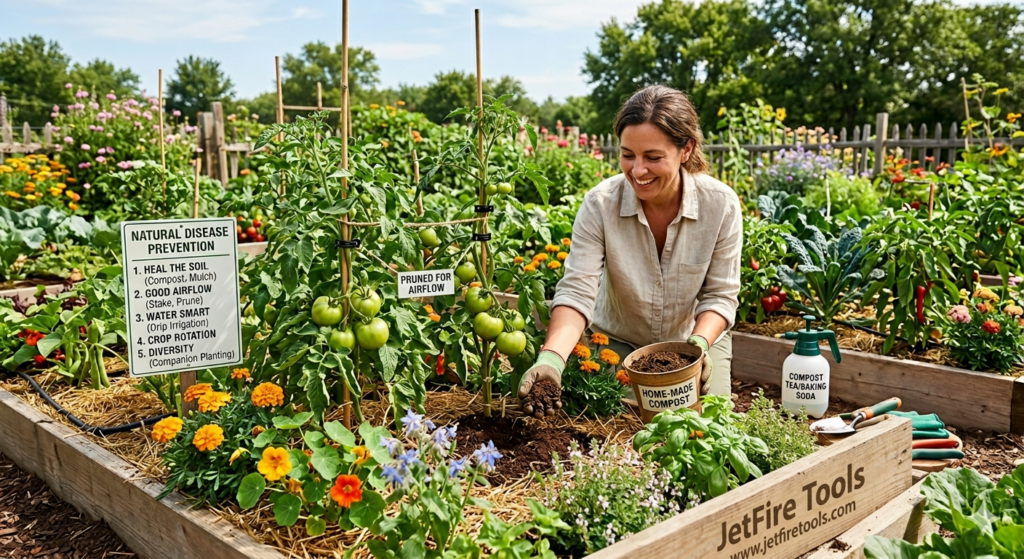
Learn how to prevent plant diseases naturally using proven organic methods. Discover expert tips, homemade remedies, soil care, and eco-friendly solutions to keep your garden healthy and thriving. how to prevent plant diseases naturally, natural plant disease control, organic gardening tips, prevent plant fungus naturally, eco friendly pest control plants, homemade fungicide for plants, healthy garden practices, soil health gardening, plant disease prevention tips. How to prevent plant diseases naturally
Stop garden pests and fungi before they start. Discover expert-backed, 100% natural strategies to prevent plant diseases and grow a resilient, chemical-free harvest today. how to prevent plant diseases naturally, organic garden disease control, natural fungicide for plants, soil health for disease prevention, companion planting for health, Jetfire Tools garden care. how to prevent plant diseases naturally, how to prevent plant diseases naturally. how to prevent plant diseases naturally, how to prevent plant diseases naturally. how to prevent plant diseases naturally, how to prevent plant diseases naturally.
How to prevent plant diseases naturally, how to prevent plant diseases naturally. how to prevent plant diseases naturally, how to prevent plant diseases naturally. how to prevent plant diseases naturally.
Discover more from Leading Garden Tools Manufacturer & Supplier in India
Subscribe to get the latest posts sent to your email.
Pingback: Powerful Organic Fertilizer for Home Garden in India (100% Natural Growth Boost Guide)
Pingback: 10 Common Beginner Mistakes in Gardening You Must Avoid for a Thriving Garden (Pro Tips Inside)