
Whiteflies Treatment for Plants: Complete Expert Guide to Eliminate Whiteflies Naturally and Effectively
Table of Contents
Whiteflies Treatment for Plants: Save Your Garden Successfully Now!
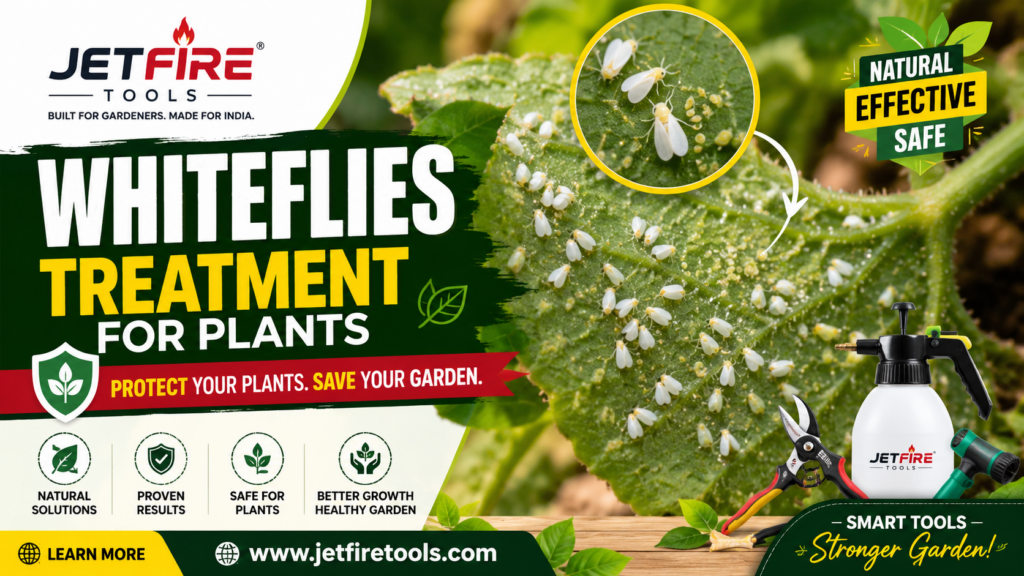
Whiteflies may look harmless because of their tiny size and white powder-like wings, but experienced gardeners know how destructive these insects can become. If you’ve ever touched a plant and seen a cloud of tiny white insects fly into the air, you’re probably dealing with a whitefly infestation.
Over the years, whiteflies have become one of the most common pests affecting home gardens, terrace gardens, kitchen gardens, nurseries, and even indoor plants across India. They attack vegetables, flowering plants, herbs, fruit plants, ornamental shrubs, and greenhouse crops.
The biggest challenge is that whiteflies reproduce extremely fast. A small infestation can turn into a serious plant health problem within a few weeks if left untreated.
This comprehensive guide covers everything you need to know about Whiteflies Treatment for Plants, including identification, causes, natural remedies, chemical control options, prevention techniques, expert recommendations, and the best gardening tools that can help maintain a healthy garden.
What Are Whiteflies?
Whiteflies are tiny sap-sucking insects belonging to the Aleyrodidae family. Although they resemble miniature moths, they are closely related to aphids and mealybugs.
Adult whiteflies are typically:
| Characteristic | Description |
|---|---|
| Size | 1-2 mm |
| Color | White or pale yellow |
| Wings | Powdery white coating |
| Feeding Habit | Sap-sucking |
| Preferred Location | Underside of leaves |
| Reproduction Rate | Extremely high |
Whiteflies feed by piercing plant tissues and sucking out plant sap, weakening the plant over time.
Why Whiteflies Are Dangerous for Plants
Many gardeners underestimate whiteflies because they are so small. However, their damage accumulates rapidly.
Whiteflies harm plants by:
- Extracting essential nutrients from plant sap.
- Reducing plant vigor and growth.
- Causing leaf yellowing.
- Triggering premature leaf drop.
- Producing honeydew that attracts ants.
- Encouraging black sooty mold growth.
- Spreading plant viruses.
In severe infestations, vegetable yields can decrease significantly and flowering plants may stop blooming altogether.
Signs of Whitefly Infestation
Early detection is the key to successful treatment.
Common Symptoms
| Symptom | What It Indicates |
|---|---|
| Yellow leaves | Nutrient loss |
| Curling foliage | Sap extraction |
| Sticky leaves | Honeydew secretion |
| Black mold | Sooty mold growth |
| Slow growth | Plant stress |
| Flying white insects | Active infestation |
A simple test is to gently shake the plant. If white insects suddenly fly upward, whiteflies are likely present.
Plants Most Commonly Attacked by Whiteflies
Whiteflies are not selective and attack many garden plants.
Vegetable Plants
- Tomato
- Brinjal
- Chilli
- Capsicum
- Cucumber
- Okra
- Cabbage
For healthy vegetable production, proper pruning is equally important. Our detailed guide on How to Prune Vegetable Plants Properly on JetFire Tools explains how improved airflow can reduce pest populations naturally.
Flowering Plants
- Rose
- Hibiscus
- Marigold
- Petunia
- Jasmine
Indoor Plants
- Money Plant
- Peace Lily
- Pothos
- Areca Palm
Why Whiteflies Spread So Fast
Several conditions encourage whitefly populations.
| Cause | Impact |
|---|---|
| Warm weather | Rapid breeding |
| High humidity | Improved survival |
| Dense foliage | Shelter |
| Poor airflow | Ideal environment |
| Excess nitrogen fertilizer | Tender growth attracts pests |
This is one reason gardeners should learn proper maintenance practices. Our article on Low Maintenance Plants for Home Garden discusses plant choices that naturally require less intervention and experience fewer pest issues.
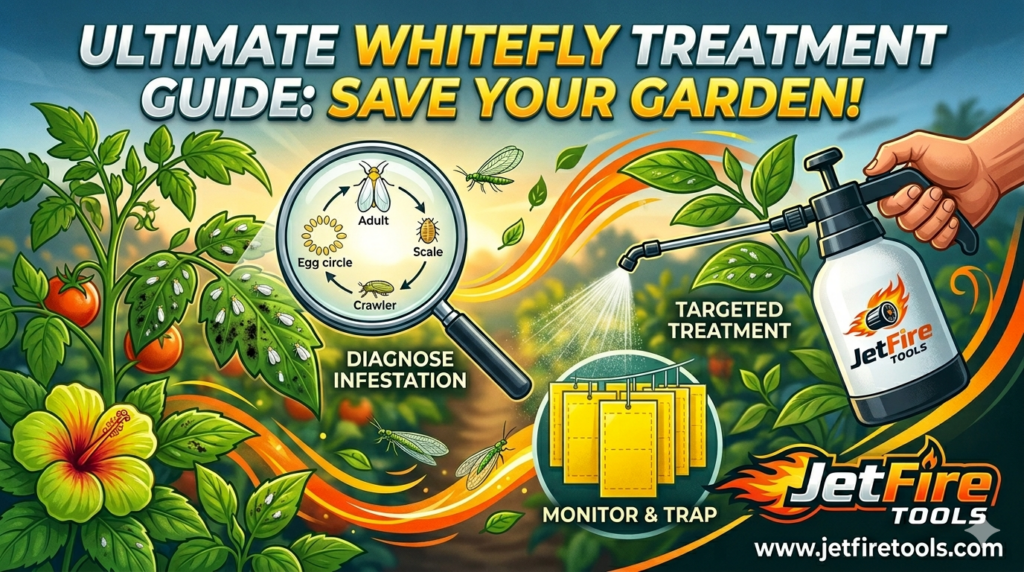
Whiteflies Life Cycle Explained
Understanding the life cycle helps in selecting effective treatments.
| Stage | Duration |
|---|---|
| Egg | 5-7 days |
| Nymph | 2-4 weeks |
| Pupa | 1 week |
| Adult | 1-2 months |
A female whitefly can lay hundreds of eggs during her lifespan, making quick intervention critical.
Step-by-Step Whiteflies Treatment for Plants
The most successful treatment combines physical, biological, and preventive methods.
Step 1: Isolate Infected Plants
Move heavily infested plants away from healthy plants.
This prevents rapid spread throughout your garden.
Step 2: Remove Heavily Damaged Leaves
Use clean pruning tools to remove leaves covered with eggs or nymphs.
Sharp pruning equipment ensures clean cuts and reduces plant stress.
Gardeners looking for reliable gardening equipment can explore quality pruning and maintenance tools from JetFire Tools, an emerging garden tool brand in India focused on home gardeners and plant enthusiasts.
Step 3: Wash Plants Thoroughly
Use a strong water spray directed at the underside of leaves.
This simple method can remove hundreds of whiteflies immediately.
Many gardeners already use watering equipment discussed in our article on Top 10 Gardening Tools for Home Use, where proper watering accessories play a major role in pest management.
Step 4: Apply Neem Oil Spray
Neem oil remains one of the most effective natural solutions.
Neem Oil Formula
| Ingredient | Quantity |
|---|---|
| Neem Oil | 5 ml |
| Mild Liquid Soap | 2 ml |
| Water | 1 Liter |
Spray every 5-7 days.
Neem disrupts feeding and reproduction without harming plants.
Step 5: Use Yellow Sticky Traps
Whiteflies are strongly attracted to yellow colors.
Place yellow sticky traps around infected plants.
Benefits
| Advantage | Result |
|---|---|
| Monitoring | Detect infestation |
| Trapping Adults | Reduces breeding |
| Non-toxic | Safe for gardens |
Step 6: Introduce Natural Predators
Beneficial insects provide long-term control.
Examples include:
- Ladybugs
- Lacewings
- Encarsia formosa wasps
A healthy garden ecosystem naturally supports beneficial insects.
Natural Whiteflies Treatment for Plants
Many home gardeners prefer organic methods.
Garlic Spray
Mix crushed garlic with water and strain.
Garlic’s strong sulfur compounds repel many garden pests.
Soap Spray
A mild soap solution can kill soft-bodied insects.
Recipe
| Ingredient | Quantity |
|---|---|
| Liquid Soap | 1 teaspoon |
| Water | 1 liter |
Apply during evening hours.
Chilli-Garlic Spray
A traditional Indian gardening remedy.
Works Against
- Whiteflies
- Aphids
- Mealybugs
- Thrips
Chemical Whitefly Control
When infestations become severe, chemical treatments may be necessary.
Common Active Ingredients
| Active Ingredient | Effectiveness |
|---|---|
| Imidacloprid | High |
| Acetamiprid | High |
| Thiamethoxam | High |
| Buprofezin | Moderate |
Always follow label directions carefully.
Best Time for Whiteflies Treatment in India
Timing significantly affects success.
| Season | Whitefly Activity |
|---|---|
| Summer | Very High |
| Monsoon | Moderate |
| Post-Monsoon | High |
| Winter | Lower |
Ideal Treatment Time
- Early morning
- Late evening
Avoid spraying during peak sunlight hours.
Whiteflies on Vegetable Plants
Kitchen gardens often suffer the most damage.
Tomatoes
Tomatoes are particularly vulnerable.
Gardeners growing tomatoes should also read our guide on Natural Fungicides for Plants, as fungal problems often appear after pest infestations weaken plant health.
Cucumbers
Whiteflies spread rapidly among cucumber vines due to dense foliage.
Maintaining proper spacing helps reduce infestations.
Whiteflies and Extreme Heat
Many gardeners assume extreme heat kills whiteflies.
Unfortunately, whiteflies often thrive during hot weather.
During summer, combine pest management with heat protection strategies discussed in our article How to Protect Plants from Extreme Heat.
Healthy plants recover from pest attacks much faster than heat-stressed plants.
Common Mistakes Gardeners Make
Overusing Pesticides
Excessive spraying kills beneficial insects.
Ignoring Leaf Undersides
Whiteflies hide beneath leaves.
Always inspect both sides.
Delayed Treatment
Waiting too long allows populations to explode.
Poor Air Circulation
Crowded plants encourage pest outbreaks.
Excess Fertilization
Too much nitrogen creates tender growth that attracts whiteflies.
Expert Tips for Permanent Whitefly Control
Expert Tip #1
Inspect plants weekly rather than monthly.
Expert Tip #2
Combine multiple treatment methods instead of relying on one solution.
Expert Tip #3
Focus on prevention, not just treatment.
Expert Tip #4
Maintain proper pruning schedules.
Good pruning reduces humidity and pest shelter areas.
Expert Tip #5
Improve soil health.
Strong plants resist pest attacks better.
For gardeners building healthier gardens, our guide on Low Maintenance Plants for Home Garden provides useful plant selection strategies.
Recommended Tools for Whitefly Treatment
| Tool | Purpose |
|---|---|
| Hand Sprayer | Neem application |
| Pruning Shears | Remove infected leaves |
| Garden Gloves | Safe handling |
| Water Spray Gun | Washing pests away |
| Sticky Traps | Monitoring adults |
| Garden Scissors | Precision trimming |
JetFire Tools offers practical gardening tools designed to simplify maintenance, pruning, watering, and plant care for Indian gardeners.
Integrated Whitefly Management Chart
| Stage | Action | Frequency |
|---|---|---|
| Detection | Inspect leaves | Weekly |
| Physical Removal | Water spray | Every 3-4 days |
| Organic Control | Neem spray | Weekly |
| Monitoring | Sticky traps | Continuous |
| Pruning | Remove damaged foliage | As needed |
| Prevention | Improve airflow | Ongoing |
Prevention Is Better Than Treatment
The easiest whitefly infestation to manage is the one that never starts.
Preventive measures include:
- Regular inspections
- Proper plant spacing
- Controlled fertilization
- Healthy soil management
- Timely pruning
- Removal of weeds
- Use of sticky traps
Gardeners who consistently follow preventive practices usually face far fewer pest problems throughout the year.
How Healthy Gardening Practices Reduce Whiteflies
Whiteflies rarely become serious on well-maintained plants.
A strong garden care routine should include:
- Seasonal pruning
- Balanced watering
- Soil improvement
- Heat protection
- Disease management
- Proper tool usage
You can strengthen your overall garden health by exploring related JetFire Tools resources:
- Top 10 Gardening Tools for Home Use
- How to Protect Plants from Extreme Heat
- Natural Fungicides for Plants
- How to Prune Vegetable Plants Properly
- Low Maintenance Plants for Home Garden
- Best Garden Hand Tools for Beginners
- Organic Pest Control for Home Gardens
- Kitchen Garden Care Guide
- Seasonal Gardening Tips for India
- Common Plant Diseases and Prevention
These interconnected gardening practices create a stronger ecosystem that naturally discourages whiteflies and other pests.
Conclusion
Whiteflies may be tiny insects, but their impact on plant health can be enormous. They weaken plants, reduce yields, spread diseases, and encourage fungal growth. Fortunately, with proper monitoring and timely intervention, whiteflies can be effectively controlled.
The most successful Whiteflies Treatment for Plants combines early detection, pruning, water washing, neem oil applications, sticky traps, beneficial insects, and preventive garden care. Instead of depending solely on pesticides, gardeners should focus on creating a healthy growing environment where plants remain strong and resilient.
With consistent care, quality gardening tools, and smart pest management practices, your flowers, vegetables, herbs, and ornamental plants can remain healthy, productive, and free from damaging whitefly infestations throughout the year. JetFire Tools is a registered brand of Icon Technosys Pvt Ltd.
Frequently Asked Questions (FAQ) About Whiteflies Treatment for Plants
What are whiteflies and why are they harmful to plants?
Whiteflies are tiny, winged insects that feed on plant sap by piercing leaves and stems. Although they are very small, they can cause significant damage when present in large numbers. As they feed, they remove essential nutrients from plants, leading to yellowing leaves, stunted growth, reduced flowering, and lower fruit production. Whiteflies also produce a sticky substance called honeydew, which encourages the growth of black sooty mold and can attract ants. In severe infestations, plants become weak and more vulnerable to diseases and environmental stress.
How can I identify a whitefly infestation on my plants?
The easiest way to identify whiteflies is by gently shaking an affected plant. If dozens of tiny white insects suddenly fly into the air, whiteflies are likely present. Other signs include yellowing leaves, curled foliage, sticky leaf surfaces, black sooty mold, and slow plant growth. Whiteflies usually gather on the undersides of leaves where they lay eggs and feed. Regular inspection of leaf undersides is one of the most effective ways to detect an infestation early.
Which plants are most commonly affected by whiteflies?
Whiteflies attack a wide range of plants, including vegetables, flowers, herbs, fruit plants, and ornamental species. In home gardens, tomatoes, chillies, brinjal, cucumbers, cabbage, okra, and capsicum are frequent targets. Flowering plants such as roses, hibiscus, marigolds, and petunias are also highly susceptible. Indoor plants including money plants, peace lilies, pothos, and areca palms can also become infested, especially when air circulation is poor.
What causes whiteflies to appear in a garden?
Whiteflies are attracted to warm temperatures, tender new growth, and dense plant foliage. Overuse of nitrogen-rich fertilizers often produces soft leaves that are highly attractive to these pests. Poor airflow between plants, overcrowded gardens, excessive humidity, and lack of regular inspection can create ideal conditions for whitefly populations to multiply. Whiteflies can also be introduced into a garden through newly purchased plants that already carry eggs or insects.
What is the most effective natural treatment for whiteflies?
Neem oil is widely considered one of the most effective natural treatments for whiteflies. It works by disrupting feeding, reproduction, and development of the insects without causing major harm to beneficial garden organisms when used correctly. A neem oil solution sprayed on both sides of the leaves every five to seven days can significantly reduce whitefly populations. Combining neem oil with physical removal methods, such as water spraying and pruning heavily infested leaves, often produces the best results.
Can whiteflies kill a plant?
While whiteflies do not usually kill healthy mature plants immediately, severe infestations can weaken plants to the point where they become unable to grow properly or resist diseases. Young seedlings and already stressed plants are particularly vulnerable. Long-term feeding can cause extensive nutrient loss, reduced photosynthesis, poor flowering, and low fruit production. If infestations remain untreated, some plants may eventually die due to stress and secondary infections.
How often should I spray neem oil for whiteflies?
Neem oil is typically applied every five to seven days during an active infestation. Since neem does not instantly kill all stages of the whitefly life cycle, repeated applications are necessary to target newly emerging insects. Once the infestation is under control, gardeners can reduce applications to every two to four weeks as a preventive measure. Always spray during early morning or late evening to avoid leaf burn and maximize effectiveness.
Are whiteflies more active during certain seasons in India?
Whiteflies are generally most active during warm weather conditions. Their populations tend to increase rapidly during summer and post-monsoon periods when temperatures remain high. Although they can survive throughout much of the year in many parts of India, infestations often become less severe during colder winter months. Regular monitoring is especially important from March to October when whitefly activity is usually at its peak.
Do yellow sticky traps really work against whiteflies?
Yes, yellow sticky traps are highly effective for monitoring and reducing adult whitefly populations. Whiteflies are naturally attracted to the color yellow and become trapped when they land on the adhesive surface. While sticky traps alone may not completely eliminate a severe infestation, they play an important role in integrated pest management by reducing breeding adults and helping gardeners track pest levels over time.
Can I use soap spray to control whiteflies?
Soap sprays can be effective against whiteflies, especially when infestations are detected early. A mild liquid soap solution mixed with water can disrupt the protective outer layer of soft-bodied insects, causing dehydration and death. It is important to use gentle soap products and test the solution on a small portion of the plant before widespread application. Repeated treatments may be necessary because soap sprays generally do not affect eggs.
What is the best time of day to treat whiteflies?
The best time to apply any whitefly treatment is early morning or late evening. During these periods, temperatures are cooler and the risk of leaf damage from sprays is lower. Spraying during the hottest part of the day can cause leaf burn and reduce treatment effectiveness. Whiteflies are also less active during cooler hours, allowing treatments to remain on plant surfaces longer.
Why do whiteflies gather on the undersides of leaves?
The undersides of leaves provide shelter from direct sunlight, rain, and predators. These areas also offer easier access to plant sap and create a more stable environment for egg-laying and development. Because whiteflies spend much of their life cycle beneath leaves, gardeners often miss early infestations. Thorough inspection and treatment of leaf undersides are essential for successful control.
Can beneficial insects help control whiteflies?
Beneficial insects are among the most sustainable and environmentally friendly ways to manage whiteflies. Predators such as ladybugs, lacewings, and parasitic wasps feed on whitefly eggs, nymphs, and adults. Encouraging beneficial insects in the garden through diverse planting and reduced pesticide use can significantly reduce whitefly populations over time. Biological control is particularly useful in organic gardens and greenhouse environments.
How long does it take to get rid of whiteflies completely?
The time required depends on the severity of the infestation and the treatment methods used. Mild infestations can often be controlled within two to three weeks through consistent spraying, pruning, and monitoring. Heavy infestations may require four to eight weeks of regular treatment because whitefly eggs continue hatching over time. Persistence is important, as stopping treatment too early often allows populations to rebound.
Can whiteflies spread diseases to plants?
Yes, whiteflies are known carriers of several plant viruses that affect vegetables and ornamental crops. As they feed on infected plants and move to healthy ones, they can transmit viral diseases that cause leaf curling, yellowing, reduced growth, and poor yields. This is one reason why early whitefly management is so important, especially in vegetable gardens where virus transmission can significantly impact crop production.
Should I remove heavily infested leaves?
Removing heavily infested leaves is often one of the fastest ways to reduce whitefly numbers. Leaves containing large clusters of eggs, nymphs, or adults can serve as breeding centers for the entire garden. Using clean pruning tools to remove and dispose of these leaves can immediately lower pest pressure and improve the effectiveness of other treatments such as neem oil or soap sprays.
Do indoor plants get whiteflies?
Indoor plants can absolutely suffer from whitefly infestations. Whiteflies often enter homes through newly purchased plants or open windows and quickly establish themselves on houseplants. Indoor environments with limited airflow and warm temperatures can support their reproduction. Regular inspection, isolation of affected plants, and prompt treatment are essential for preventing infestations from spreading to other indoor plants.
Can overwatering contribute to whitefly problems?
Overwatering does not directly cause whiteflies, but it can weaken plant health and create favorable conditions for pests. Plants suffering from root stress often become more susceptible to insect attacks. Excess moisture may also increase humidity around dense foliage, indirectly encouraging pest activity. Maintaining proper watering practices helps keep plants vigorous and better able to tolerate occasional pest pressure.
What gardening tools are useful for whitefly control?
Several gardening tools can make whitefly management more effective. Hand sprayers are useful for applying neem oil and organic treatments, while pruning shears help remove infested leaves and stems. Water spray guns can physically wash whiteflies from plants, and yellow sticky traps assist with monitoring and capturing adults. Reliable gardening tools from brands such as JetFire Tools can help gardeners maintain healthier plants and respond quickly to pest problems.
How can I prevent whiteflies from returning after treatment?
Preventing future infestations requires a combination of good gardening practices. Regular plant inspections, proper spacing, balanced fertilization, routine pruning, weed removal, and improved airflow all help discourage whiteflies. Introducing beneficial insects, using sticky traps for monitoring, and maintaining healthy soil can further strengthen plant resistance. Consistent preventive care is often more effective and less costly than dealing with a major whitefly outbreak later.
Discover the most effective whiteflies treatment for plants with expert-tested methods, natural remedies, prevention strategies, and step-by-step solutions. Learn how to identify, control, and permanently eliminate whiteflies from vegetables, flowers, indoor plants, and home gardens using practical techniques and quality gardening tools from JetFire Tools. Whiteflies Treatment for Plants, whitefly control, whitefly prevention, whitefly spray, whiteflies on leaves, natural whitefly treatment, whiteflies in garden, whiteflies on tomato plants, whiteflies on vegetable plants, insect control for plants, garden pest management, home garden pest control, JetFire Tools gardening
Master the ultimate whiteflies treatment for plants. Discover proven organic, chemical, and physical strategies to eliminate whitefly infestations permanently and revive your garden’s health. Whiteflies Treatment for Plants, how to get rid of whiteflies, organic whitefly control, best whitefly killer, indoor plant whiteflies, whiteflies lifecycle, jetfire tools gardening, agricultural pest control India, natural neem oil spray, greenhouse whitefly removal.
Whiteflies Treatment for Plants, How to Get Rid of Whiteflies on Plants, Whitefly Control in Garden, Whiteflies on Vegetable Plants, Natural Whitefly Treatment, Whitefly Prevention Methods, Whitefly Pest Control, Whiteflies Treatment for Indoor Plants, Best Whitefly Spray for Plants, Whiteflies in Home Garden.
Discover more from Leading Garden Tools Manufacturer & Supplier in India
Subscribe to get the latest posts sent to your email.
You must be logged in to post a comment.