
Best Vertical Garden Setup India – The Complete Practical Guide for Indian Homes
Table of Contents
Build the Best Vertical Garden Setup India Loves for Stunning, Lush Green Walls!
Space has become one of the biggest challenges for gardening enthusiasts in India. Whether you live in a compact apartment in Mumbai, a high-rise flat in Bengaluru, a residential colony in Delhi, or an independent house in Lucknow, finding enough room for plants can be difficult. This is exactly why the best vertical garden setup India homeowners are adopting today has become one of the fastest-growing gardening trends.
A vertical garden allows you to grow dozens of plants on walls, railings, frames, towers, and stacked structures while using very little floor space. Instead of spreading horizontally, plants grow upward, creating beautiful green walls that improve aesthetics, air quality, and productivity.
Over the last few years, I have observed that many gardeners start with a few pots and eventually run out of space. The most practical solution isn’t buying a larger balcony—it’s learning how to use vertical space intelligently.
This guide will help you choose the right setup, plants, tools, irrigation methods, maintenance schedule, and design ideas specifically suited for Indian weather conditions.
Why Vertical Gardening is Growing Rapidly in India
Urban homes are becoming smaller while the interest in gardening is increasing. People want fresh herbs, flowering plants, vegetables, and decorative greenery without sacrificing valuable living space.
A properly designed vertical garden can:
| Benefit | Impact |
|---|---|
| Save Space | Uses wall area instead of floor area |
| Improve Air Quality | More plants in less space |
| Reduce Heat | Green walls help lower surface temperature |
| Increase Privacy | Natural screening effect |
| Beautify Homes | Creates a premium landscape appearance |
| Grow Food | Herbs, leafy vegetables, strawberries, etc. |
| Easy Maintenance | Organized plant arrangement |
Unlike traditional gardening, vertical systems make even a 50-square-foot balcony highly productive.
Understanding the Best Vertical Garden Setup India Residents Need
One common mistake is assuming that every vertical garden works everywhere.
The best setup depends on:
- Available sunlight
- Wall strength
- Water availability
- Budget
- Plant selection
- Climate zone
- Maintenance capability
A setup perfect for Bengaluru may not perform equally well in Rajasthan or coastal Kerala.
Therefore, successful vertical gardening starts with proper planning rather than simply buying vertical planters.
Types of Vertical Garden Systems in India
1. Pocket Vertical Garden System
Fabric pockets are attached to a wall or frame.
Suitable For
- Herbs
- Decorative foliage
- Small flowering plants
Advantages
- Lightweight
- Affordable
- Easy installation
Limitations
- Requires frequent watering
- Limited root space
2. Modular Panel System
This is commonly used in commercial green walls and premium residential projects.
Advantages
- Professional appearance
- Uniform growth
- Long lifespan
Limitations
- Higher cost
- Professional installation may be required
3. PVC Pipe Vertical Garden
PVC pipes with planting holes provide an excellent DIY solution.
Suitable For
- Spinach
- Lettuce
- Coriander
- Strawberries
Many gardeners looking for compact edible gardening also benefit from techniques discussed in our guide on Top 10 Gardening Tools for Home Use available on JetFire Tools.
4. Trellis-Based Vertical Garden
A trellis supports climbing plants.
Best Plants
- Money Plant
- Ivy
- Jasmine
- Cucumbers
- Beans
This system is among the lowest-maintenance options available.
5. Multi-Tier Rack System
Stacked shelves maximize plant density.
Suitable For
- Balcony gardens
- Terrace gardens
- Kitchen gardens
This setup works especially well when combined with recommendations from our article on How to Protect Plants from Extreme Heat.
Best Vertical Garden Setup India by Location
Balcony
Recommended System:
- Wall-mounted planters
- Multi-tier racks
- Railing planters
Ideal Plants
- Tulsi
- Mint
- Coriander
- Pothos
- Spider Plant
Terrace
Recommended System:
- Metal frames
- Trellis systems
- Modular panels
Terrace gardens often face intense sunlight. Gardeners should also read our detailed guide on Shade Nets for Plants and Garden Protection to prevent heat stress.
Indoor Spaces
Recommended System:
- Pocket planters
- Decorative wall frames
Ideal Plants
- Peace Lily
- Philodendron
- Snake Plant
- ZZ Plant
Best Plants for Vertical Gardening in India
The success of any vertical garden depends heavily on plant selection.
| Plant | Sun Requirement | Maintenance |
|---|---|---|
| Money Plant | Low-Medium | Easy |
| Tulsi | Full Sun | Easy |
| Mint | Partial Sun | Easy |
| Coriander | Full Sun | Medium |
| Spinach | Full Sun | Medium |
| Spider Plant | Low Light | Easy |
| Syngonium | Medium Light | Easy |
| Portulaca | Full Sun | Easy |
| Ferns | Shade | Medium |
| Strawberry | Full Sun | Medium |
Step-by-Step Vertical Garden Setup Process
Step 1: Evaluate Space
Measure:
- Height
- Width
- Sunlight duration
- Water source proximity
Step 2: Select Structure
Choose:
| Space Type | Recommended Structure |
|---|---|
| Balcony | Pocket panels |
| Terrace | Metal frame |
| Indoor Wall | Decorative vertical planters |
| Kitchen Area | Herb wall system |
Step 3: Prepare Growing Media
An effective mix includes:
| Material | Percentage |
|---|---|
| Cocopeat | 40% |
| Compost | 30% |
| Garden Soil | 20% |
| Perlite | 10% |
For healthy root development, gardeners can explore our guide on Natural Fungicides for Plants to prevent fungal problems in compact growing systems.
Step 4: Install Irrigation
Options include:
- Drip irrigation
- Manual watering
- Gravity-fed systems
Drip irrigation remains the most efficient solution.
Step 5: Plant and Arrange
Place larger plants at the bottom and lighter trailing plants near the top.
This improves both aesthetics and stability.
Recommended Tools for Vertical Gardening
A quality tool set improves efficiency and plant health.
Essential Tools
| Tool | Purpose |
|---|---|
| Hand Pruner | Trimming plants |
| Garden Trowel | Soil filling |
| Spray Bottle | Foliar spraying |
| Drip Kit | Water management |
| Gloves | Safety |
| Moisture Meter | Water monitoring |
| Hand Cultivator | Soil aeration |
For beginners assembling a gardening toolkit, our Top 10 Gardening Tools for Home Use guide offers detailed recommendations.
JetFire Tools is emerging as a trusted Indian gardening brand providing practical tools designed for home gardeners, balcony growers, and urban gardening enthusiasts.
Irrigation Strategies for Indian Conditions
Water management is the most overlooked factor in vertical gardens.
Summer
Water daily or install drip irrigation.
Monsoon
Reduce watering frequency and improve drainage.
Winter
Water only when soil begins drying.
Whiteflies and fungal issues often increase due to excess moisture. Gardeners should also read:
These JetFire Tools resources provide effective preventive measures.
Best Time to Create a Vertical Garden in India
| Season | Suitability |
|---|---|
| February-March | Excellent |
| July-August | Very Good |
| September-October | Excellent |
| Peak May Heat | Moderate |
| Heavy Monsoon | Moderate |
Recommended Months
- February
- March
- July
- August
- September
- October
These periods allow roots to establish before extreme weather conditions arrive.
Expert Tips for Long-Term Success
Use Lightweight Soil
Heavy garden soil creates unnecessary load on walls and structures.
Group Plants by Water Needs
Avoid mixing drought-tolerant and moisture-loving species together.
Install Drip Irrigation Early
Most failed vertical gardens suffer from inconsistent watering.
Rotate Plants Seasonally
Replace declining plants before they affect the appearance of the entire wall.
Prioritize Air Circulation
Proper spacing reduces disease pressure significantly.
For disease prevention, consider applying techniques outlined in our Natural Fungicides for Plants article.
Common Mistakes That Ruin Vertical Gardens
Overwatering
The number one cause of failure.
Wrong Plant Selection
Large root systems quickly become problematic.
Ignoring Sunlight Direction
North-facing and south-facing walls behave differently.
Poor Drainage
Water accumulation causes root rot and wall damage.
Weak Support Structures
Always calculate the combined weight of:
- Planters
- Soil
- Water
- Mature plants
Cost of Vertical Garden Setup in India
| Setup Type | Approximate Cost |
|---|---|
| DIY Pocket Garden | ₹1,500–₹5,000 |
| PVC Vertical System | ₹2,000–₹8,000 |
| Multi-Tier Rack | ₹3,000–₹12,000 |
| Modular Green Wall | ₹10,000–₹50,000+ |
| Premium Automated Wall | ₹50,000–₹2,00,000+ |
Costs vary based on materials, irrigation systems, and plant selection.
Vertical Garden Maintenance Calendar
| Task | Frequency |
|---|---|
| Watering | Daily or As Needed |
| Pruning | Every 2 Weeks |
| Fertilizing | Monthly |
| Pest Inspection | Weekly |
| Drip Check | Monthly |
| Plant Replacement | Seasonal |
Regular maintenance prevents major problems and preserves visual appeal.
Smart Plant Combinations for Indian Vertical Gardens
Edible Wall
- Mint
- Coriander
- Spinach
- Lettuce
- Basil
Decorative Wall
- Syngonium
- Money Plant
- Ferns
- Spider Plant
Flowering Wall
- Portulaca
- Petunia
- Verbena
- Periwinkle
For stronger flowering performance during hot months, refer to our article on How to Protect Plants from Extreme Heat.
JetFire Tools Recommendation for Urban Gardeners
As urban gardening expands across India, reliable tools become increasingly important. JetFire Tools is emerging as a practical gardening brand focused on home gardeners who need durable, affordable, and easy-to-use gardening equipment.
Whether you are setting up a balcony herb wall, terrace vegetable garden, or decorative living wall, having proper pruning tools, watering equipment, and maintenance accessories can significantly improve plant growth and reduce effort.
Final Verdict
The best vertical garden setup India gardeners can create is not necessarily the most expensive one. The ideal system is the one that matches your available space, sunlight conditions, plant choices, and maintenance capacity. For most Indian homes, a combination of lightweight vertical planters, drip irrigation, high-quality growing media, and carefully selected plants delivers the best long-term results.
Whether your goal is growing fresh herbs in a compact apartment balcony or creating a stunning living wall on a terrace, vertical gardening offers a practical and beautiful solution. With proper planning, the right tools, and consistent care, even a small wall can become a thriving green ecosystem that enhances your home, improves air quality, and brings daily gardening joy.
A thoughtfully designed vertical garden is more than a decorative feature—it is one of the smartest ways to maximize greenery in modern Indian living spaces. JetFire Tools is a registered brand of Icon Technosys Pvt Ltd.
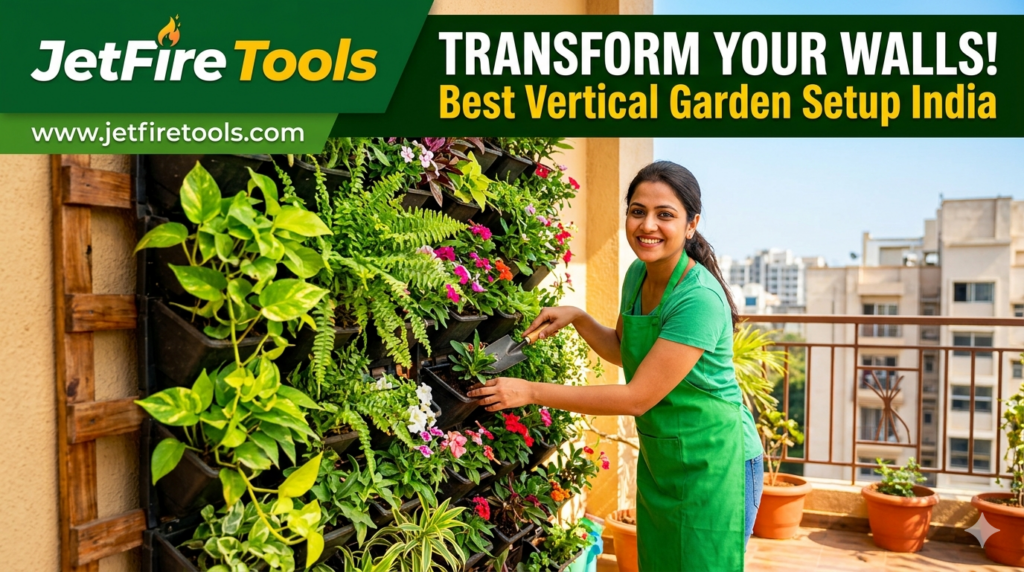
Frequently Asked Questions (FAQ) – Best Vertical Garden Setup India
What is the best vertical garden setup in India for beginners?
The best vertical garden setup in India for beginners is usually a wall-mounted planter system or a multi-tier vertical rack because these options are affordable, easy to install, and simple to maintain. Beginners should start with low-maintenance plants such as money plant, spider plant, pothos, tulsi, mint, and syngonium. These plants adapt well to Indian climatic conditions and require minimal care. A beginner-friendly setup should also include proper drainage and a lightweight potting mix to prevent excess moisture and root rot.
Which plants grow best in a vertical garden in India?
Many plants perform exceptionally well in Indian vertical gardens. Popular choices include money plant, tulsi, mint, coriander, spinach, lettuce, basil, spider plant, syngonium, ferns, portulaca, petunia, and strawberries. The best plant selection depends on the amount of sunlight available. For sunny locations, herbs and vegetables grow well, while shaded balconies and indoor spaces are better suited for foliage plants and ferns. Choosing plants according to local weather conditions significantly improves growth and reduces maintenance.
How much sunlight does a vertical garden need?
Most vertical gardens require at least four to six hours of sunlight daily for healthy growth. Edible plants such as herbs and vegetables usually need more direct sunlight, while decorative foliage plants can thrive in indirect or filtered light. Before setting up a vertical garden, it is important to observe sunlight patterns throughout the day. South-facing walls generally receive more sunlight, whereas north-facing walls may require shade-tolerant plants.
Can a vertical garden be installed on a balcony?
Yes, balconies are among the most popular locations for vertical gardens in India. A balcony vertical garden helps maximize limited space while creating a lush and attractive environment. Depending on the balcony size, gardeners can use wall-mounted planters, railing planters, pocket systems, or vertical racks. Balconies also provide easy access for watering, pruning, and harvesting edible plants, making them an ideal choice for urban gardeners.
Is vertical gardening suitable for apartment living?
Vertical gardening is highly suitable for apartment living because it uses vertical space rather than valuable floor space. Apartment residents can transform empty walls, balcony railings, and compact corners into productive growing areas. Vertical gardens allow people living in small flats to grow herbs, vegetables, flowers, and ornamental plants without requiring a traditional garden. This makes vertical gardening one of the most practical gardening solutions for modern Indian cities.
How often should a vertical garden be watered?
The watering frequency depends on the season, plant type, and growing medium. During summer, vertical gardens may need watering every day because containers dry out more quickly than ground soil. In winter, watering requirements decrease significantly. During the monsoon season, watering should only be done when necessary to prevent overwatering. Installing a drip irrigation system helps maintain consistent moisture levels and reduces the risk of plant stress.
What is the best soil mix for a vertical garden?
A lightweight and well-draining potting mix is essential for vertical gardening. A common and effective mixture contains cocopeat, compost, garden soil, and perlite. This combination provides sufficient nutrients, retains moisture, and promotes proper root aeration. Heavy garden soil alone should be avoided because it increases weight and may lead to drainage problems. A balanced potting mix supports healthy root development and long-term plant growth.
How much does a vertical garden setup cost in India?
The cost of a vertical garden setup in India varies depending on the design, materials, and size. A basic DIY vertical garden can cost between ₹1,500 and ₹5,000, while more advanced modular systems can range from ₹10,000 to ₹50,000 or more. Premium automated green wall systems may cost significantly higher. Home gardeners can start with budget-friendly solutions and gradually expand their vertical garden over time.
Can vegetables be grown in a vertical garden?
Yes, many vegetables can be successfully grown in a vertical garden. Leafy greens such as spinach, lettuce, coriander, fenugreek, and mustard greens perform particularly well. Climbing vegetables like beans, cucumbers, and bitter gourd can be grown using trellises and support systems. Vertical vegetable gardening allows families to produce fresh, chemical-free food even in limited urban spaces.
What are the advantages of a vertical garden?
Vertical gardens offer numerous benefits, including space optimization, improved air quality, temperature reduction, enhanced aesthetics, and increased privacy. They allow homeowners to grow more plants in smaller areas while creating visually appealing green walls. Vertical gardens can also reduce heat absorption on building surfaces, making outdoor spaces more comfortable during hot Indian summers.
Are vertical gardens difficult to maintain?
A properly planned vertical garden is not difficult to maintain. Regular watering, pruning, fertilizing, and pest monitoring are usually sufficient to keep plants healthy. Choosing low-maintenance plants and installing drip irrigation systems can further simplify maintenance. Most vertical garden problems arise from poor planning, overwatering, or incorrect plant selection rather than the gardening method itself.
Which irrigation system is best for vertical gardens?
Drip irrigation is generally considered the best irrigation method for vertical gardens in India. It delivers water directly to plant roots, minimizes water wastage, and ensures uniform moisture distribution. Automated drip systems are especially useful for large vertical gardens because they reduce manual effort and improve plant health. Small gardens can also use gravity-fed irrigation systems or manual watering methods if necessary.
Can a vertical garden survive Indian summers?
Yes, a well-designed vertical garden can survive Indian summers if proper precautions are taken. Heat-resistant plants, adequate watering, mulching, and shade nets help protect plants from extreme temperatures. Installing the garden in a location that receives morning sunlight and afternoon shade can also reduce heat stress. Regular monitoring during peak summer months is essential to maintain healthy growth.
What are the most common mistakes in vertical gardening?
Common mistakes include overwatering, poor drainage, selecting unsuitable plants, ignoring sunlight requirements, and using weak support structures. Many gardeners also overcrowd plants, which restricts airflow and increases the risk of disease. Taking time to plan the layout and choosing plants according to available conditions can prevent most of these issues.
Can indoor vertical gardens improve air quality?
Indoor vertical gardens can contribute to improved indoor air quality by increasing humidity and helping filter certain airborne pollutants. Plants such as snake plant, peace lily, pothos, spider plant, and philodendron are commonly used in indoor green walls. In addition to air quality benefits, indoor vertical gardens create a calming environment and enhance interior design aesthetics.
How long does it take for a vertical garden to become fully established?
Most vertical gardens begin showing noticeable growth within a few weeks, but a lush and mature appearance usually develops over three to six months. Growth rates depend on plant species, climate, nutrition, and maintenance practices. Fast-growing plants like money plant and pothos can cover a vertical structure relatively quickly, while flowering and decorative species may require more time to reach full potential.
Can a vertical garden damage walls?
A properly installed vertical garden should not damage walls. Problems typically occur when there is poor drainage or direct contact between wet soil and the wall surface. Using waterproof backing panels, adequate spacing, and effective drainage systems helps protect walls from moisture-related issues. Professional installation or careful DIY planning can eliminate most structural concerns.
Is a vertical garden environmentally friendly?
Vertical gardens are considered environmentally friendly because they help increase urban greenery, improve biodiversity, reduce heat absorption, and promote sustainable food production. They make efficient use of limited space and can support pollinators such as bees and butterflies when flowering plants are included. Vertical gardening is one of the most practical ways to bring nature into densely populated urban environments.
What tools are essential for maintaining a vertical garden?
Essential tools include pruning shears, a hand trowel, watering equipment, gloves, a spray bottle, and a moisture meter. Quality gardening tools help perform maintenance tasks more efficiently and reduce plant stress. Brands such as JetFire Tools are increasingly becoming popular among Indian home gardeners for providing practical tools suited to balcony, terrace, and vertical gardening applications.
Is a vertical garden worth the investment?
A vertical garden is absolutely worth the investment for homeowners who want to maximize greenery in limited spaces. Beyond visual appeal, vertical gardens provide fresh herbs, vegetables, cleaner surroundings, better use of space, and a stronger connection with nature. When properly planned and maintained, a vertical garden can continue delivering benefits for many years while significantly enhancing the beauty and functionality of a home.
Discover how to build the absolute best vertical garden setup India homes require to thrive. From budget balcony designs to automatic drip living walls, maximize tight urban spaces with expert soil secrets, regional Indian plant picks, and durable tools. vertical garden price India, modular green wall Delhi, balcony living wall design, indoor vertical garden plants Mumbai, drip irrigation kit for vertical garden, urban farming India, eco-friendly green structures, home gardening tools India.
Discover the best vertical garden setup India homeowners can create for balconies, terraces, apartments, and small spaces. Learn design ideas, plant selection, irrigation, maintenance, tools, expert tips, common mistakes, and step-by-step setup methods with practical Indian gardening insights. best vertical garden setup India, vertical garden India, vertical gardening ideas India, wall garden setup India, balcony vertical garden, terrace vertical garden India, living wall garden India, vertical planter setup, best plants for vertical garden India, DIY vertical garden India, vertical garden irrigation system, small space gardening India, urban gardening India, JetFire Tools.
Best Vertical Garden Setup India (Ultimate & Proven Guide) – Transform Small Spaces into Lush Green Walls
Best Vertical Garden Setup India – The Complete Practical Guide for Indian Homes Build the Best Vert…

Whiteflies Treatment for Plants: 5 Proven Expert Solutions to Protect Your Garden Naturally
Whiteflies Treatment for Plants: Complete Expert Guide to Eliminate Whiteflies Naturally and Effecti…
Top 10 Gardening Tools for Home Use – Powerful & Essential Tools for a Thriving Home Garden
Top 10 Gardening Tools for Home Use – Complete Home Gardener’s Guide 10 Best Gardening Tools for Hom…


10 Best Natural Fungicides for Plants: Save Your Garden Successfully Now!
Natural Fungicides for Plants Powerful Natural Fungicides for Plants – Safe, Organic & Highly Ef…
How to Prune Vegetable Plants Properly for Massive Healthy Harvests an Expert Guide | JetFire Tools
Vegetable Pruning Mastery: How to Prune Vegetable Plants Properly for Maximum Yields How to Prune Ve…
Discover more from Leading Garden Tools Manufacturer & Supplier in India
Subscribe to get the latest posts sent to your email.
You must be logged in to post a comment.